How to fix pet urine stains on hardwood floors in Portland, OR (2026)
Can black pet urine stains be sanded out of hardwood? Learn what works: surface vs deep stains, oxalic acid bleaching, and board weaving costs in Portland. CCB #227332.
Can pet urine stains be sanded out of hardwood floors?
Light gray or tan surface pet stains typically sand out during standard refinishing by removing 1/32 to 1/16 inch of wood. However, deep black stains caused by ammonia reacting with oak tannins penetrate through the wood fiber and cannot be sanded out; the permanent solution is selective board replacement and subfloor odor sealing.
Hardwood floor pet stain severity and repair guide
Have pet urine stains on your Portland hardwood floors? Don't guess whether they can be sanded out. Text a close-up photo to owner Vasi Popovici at 503-388-1689 for a fast, honest written evaluation in 15 minutes.
Every few weeks we get the same call. A Portland homeowner pulls up an old rug and finds a dark patch on the oak underneath. Sometimes it is a faint gray cloud. Sometimes it is jet black, with the board edges darker than the centers. The question is always the same: "Can this be sanded out?"
The honest answer is: sometimes yes, often partially, and sometimes not at all. There is a lot of bad advice online promising miracle fixes for urine stains. We would rather tell you exactly what works and what does not, so you can make a good decision for your floor.
Why urine turns oak black
The black color is not dirt, and it is not mold. It is chemistry.
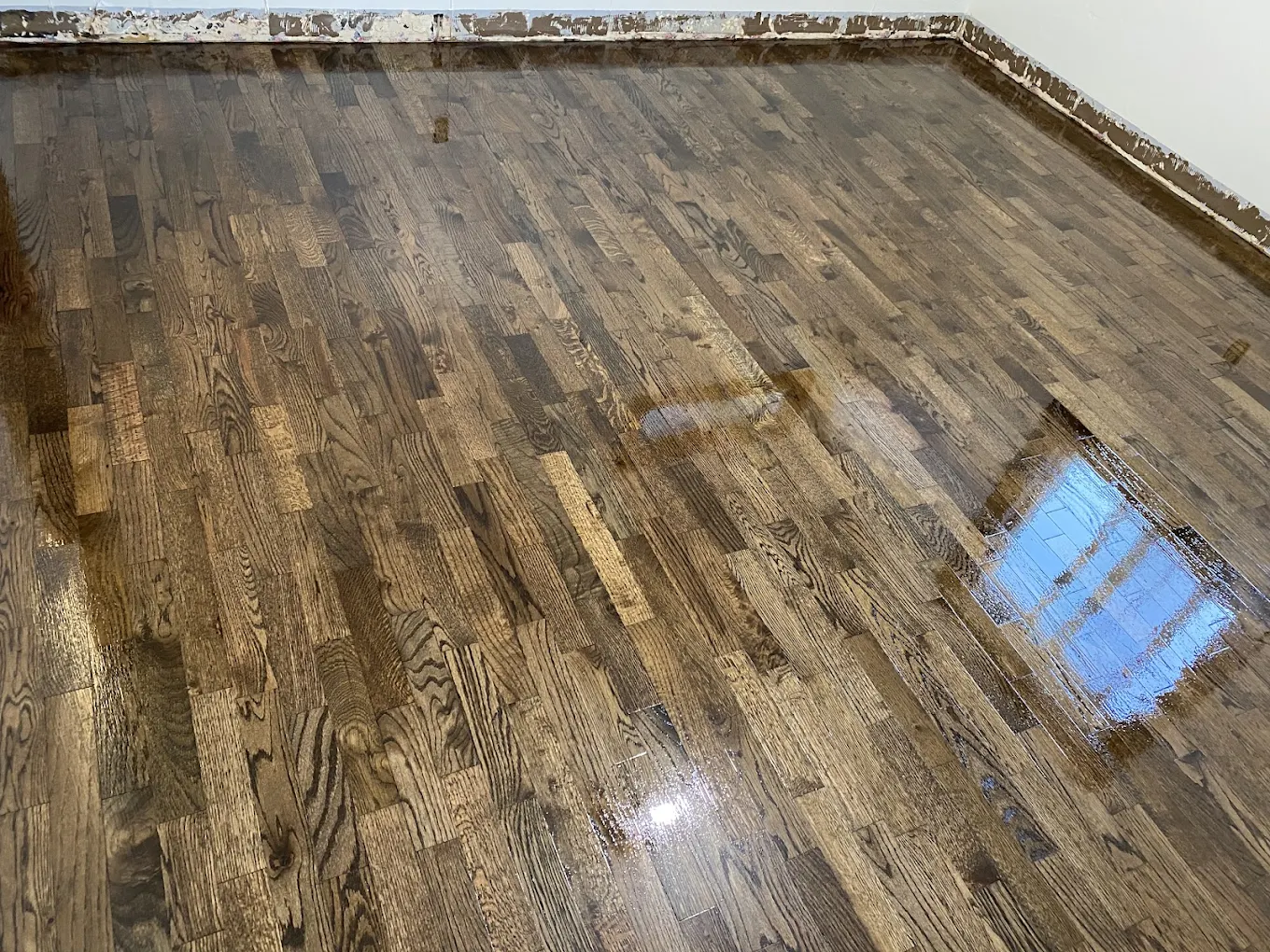
Oak, the most common flooring wood in Portland homes, is naturally high in tannins, the same compounds that let oak barrels flavor wine and whiskey. When pet urine sits on the floor, it breaks down into ammonia, and the ammonia reacts with those tannins. The reaction darkens the wood itself, first to gray, then brown, then black.
This matters because the stain is not sitting on the wood, it has become part of the wood. A fresh accident wiped up within minutes usually never gets past the finish. But urine that sat overnight, or a spot hit repeatedly for months, soaks through the finish, into the wood fibers, and in bad cases through the board into the subfloor below.
Surface stain or soaked subfloor? How to tell
Before talking fixes, we need to know how deep the problem goes. On a walkthrough we look at three things:
- Color. Light gray or tan clouding usually means a shallow stain. Deep brown to black, especially with darkened board edges, means the urine traveled down the gaps between boards.
- Smell. If the spot still smells of ammonia on a warm day or after a damp mop, the urine reached the subfloor. Odor that survives cleaning almost always comes from below the hardwood, not from it.
- Board condition. Repeated soaking makes boards cup, crack, or feel spongy. If the wood is physically damaged, no amount of sanding or bleaching brings it back.
What sanding can and cannot remove
A full professional refinishing removes roughly 1/32 to 1/16 of an inch of wood. That is enough to erase scratches, finish wear, sun fading, and shallow urine stains that never got past the top layer of the wood. If your stains are light tan or pale gray, a normal sand and refinish often makes them disappear completely.
Black stains are a different story. The tannin reaction typically penetrates an eighth of an inch or more, and often runs all the way through a 3/4 inch board along the edges where liquid drained between boards. Sanding deeper to chase it is not an option, because a solid oak floor only has so much wood above the tongue and groove.
Our rule of thumb from years of Portland refinishing work: gray sands out, brown sometimes sands out, black almost never sands out completely. Sanding will lighten a black stain, but a shadow usually remains.
Oxalic acid bleaching, honestly assessed
Wood bleach comes up in every online thread, so let us assess it fairly.
Oxalic acid specifically reverses tannin darkening. Applied to a sanded black stain, it genuinely does lighten it, and on stains that are mostly gray or brown it can get the wood close enough to blend under a stain and finish. We use it, and it earns its place in the truck. But two caveats matter:
- It rarely erases black completely. A deep black stain treated with oxalic acid usually becomes a lighter brown ghost, still visible under a natural or light finish.
- It changes how the wood takes stain. Bleached oak colors differently than the boards around it, so the repair can trade a dark shadow for a pale blotch. Test patches reduce this, but anyone promising invisible results from bleach alone is overpromising.
Two-part peroxide bleaches go further but are harsher on the wood fibers and even harder to blend. We treat them as a last resort before replacement.
If you are weighing these options for your own floor, request a free quote and we will look at the actual stains in person before recommending anything. Depth of staining is hard to judge from a photo.
Board replacement and weave-ins: the reliable fix
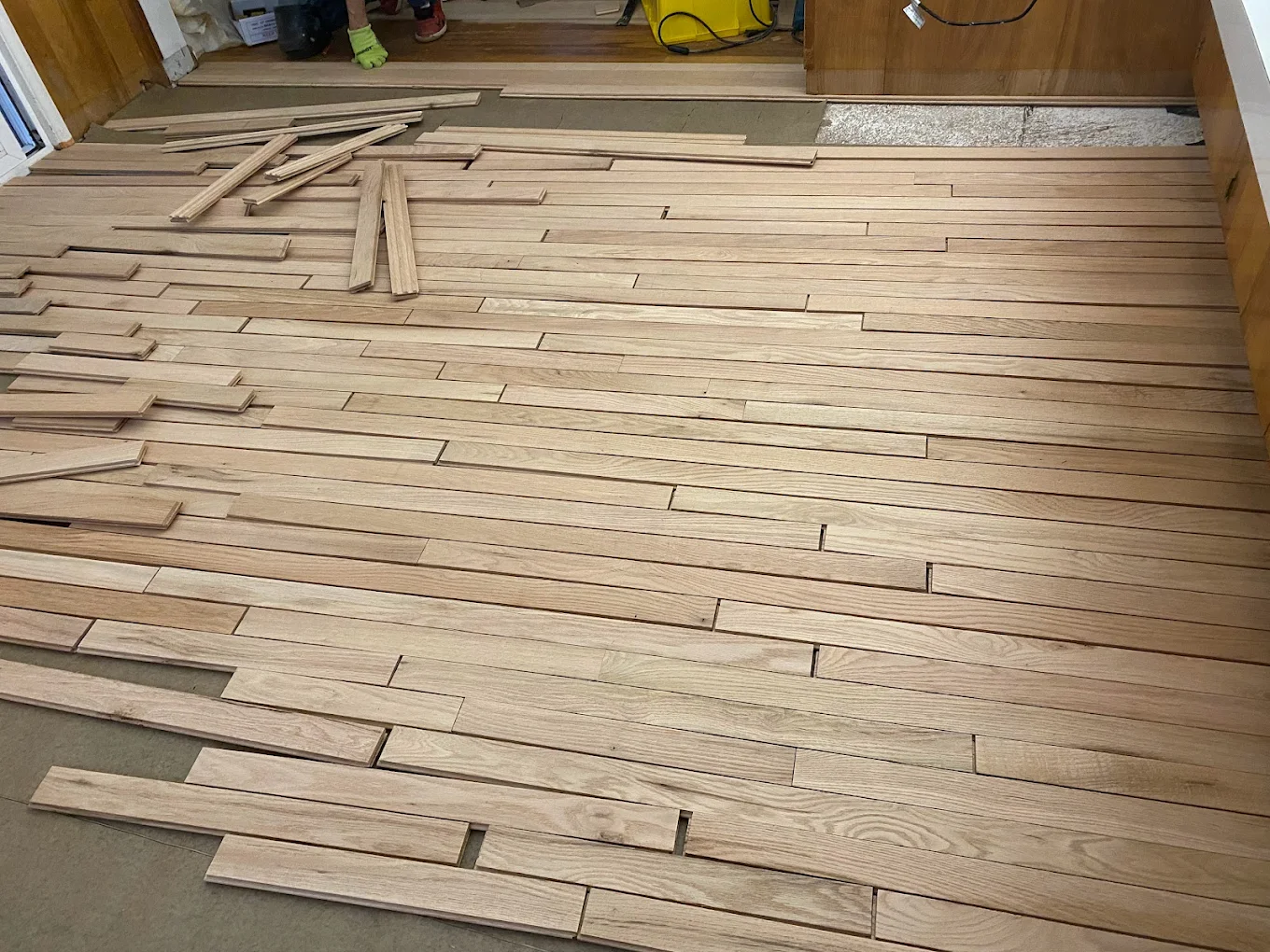
When a stain is black, smelly, or structural, the honest fix is to replace the affected boards with a weave-in: we cut out the damaged boards, stagger the joints so there is no straight patch line, and weave in new boards of the same species, width, and grade.
This is also the only fix that addresses the subfloor. With the boards out, we can inspect the plywood underneath, let it dry, and seal it with a shellac-based odor sealer. Skipping this step is why some refinished floors start smelling again the first humid week of a Portland summer.
For cost context, a small weave-in of a handful of boards typically runs a few hundred dollars, plus refinishing to blend the repair. Refinishing itself typically lands in the $4.99 to $6.95 per square foot range across most Portland projects. Every floor is different, which is why we quote from a walkthrough rather than a formula. Our hardwood floor repair and pet stain hardwood repair pages cover how we match old floors in more detail.
Stain colors that hide what remains
Sometimes the budget argues for living with a faint shadow rather than replacing boards. In that case, stain choice does a lot of heavy lifting.
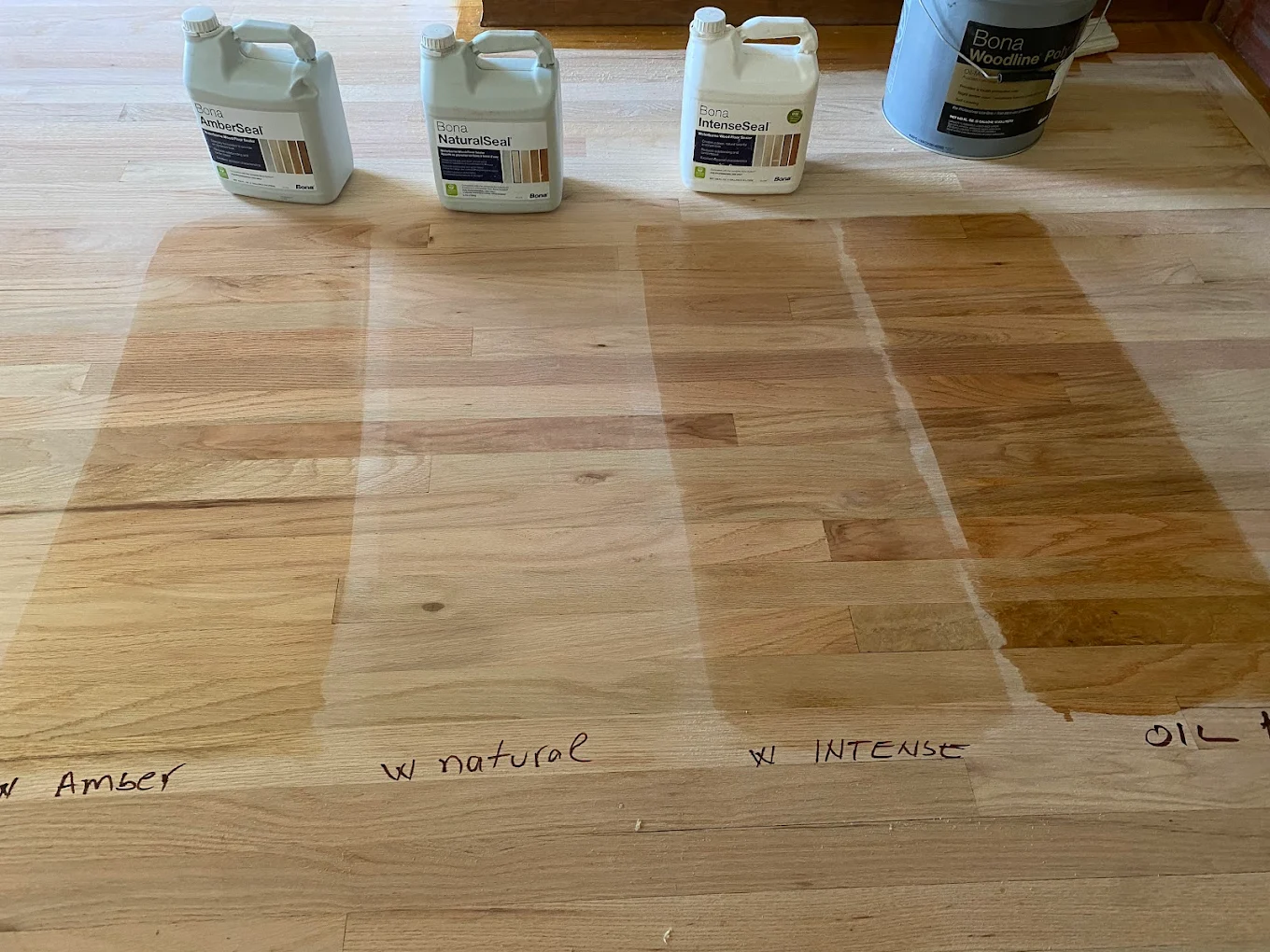
Light and natural finishes are the least forgiving, since every residual mark reads clearly through them. Mid-tone and darker browns, the Special Walnut, Provincial, and Jacobean family, absorb the ghost of an old stain remarkably well. We have taken floors with multiple bleached-out shadows to Special Walnut and had the owners unable to find the spots afterward.
Our guide to the best stain colors for Portland hardwood floors walks through what suits each era of home. The short version for stain-hiding purposes: warmer and slightly darker beats lighter and cooler.
Finishes that resist the next accident
The stain that ruined the board got through because the old finish was worn, or because the accident sat too long. Both are fixable.
We recommend waterborne polyurethane for households with pets, and we use it on most of our residential work. Modern waterborne finishes are harder than the old oil finishes, resist moisture well, and give you hours rather than minutes before an accident reaches the wood. A satin sheen also hides the fine scratches that otherwise become channels for liquid to reach bare wood.
For the full picture on species, finishes, and daily life with dogs and cats on hardwood, see our guide to pet-friendly hardwood flooring in Portland.
Prevention that actually works
None of this is complicated, but it is what keeps repaired floors repaired:
- Clean accidents immediately with paper towels, then a lightly damp cloth. Speed matters more than product.
- Follow up with an enzyme cleaner. Enzymes break down the uric acid that draws pets back to remark the same spot.
- Put a waterproof mat under water bowls and washable rugs where accidents happen.
- Watch senior pets. Most severe subfloor damage we see comes from aging pets having repeated accidents in one hidden spot.
- Keep the finish maintained. A recoat every 5 to 7 years keeps the protective layer thick enough to do its job.
Get an honest assessment
If you have found dark stains under a rug, we are happy to take a look and tell you plainly which fix your floor actually needs. Sometimes that is a full refinish, sometimes a small weave-in, and sometimes the stain will sand out fine and you can save your money. Request a free quote online, or call Vasi directly at 503-388-1689. Flooring PDX is owner-operated, licensed, and insured, CCB #227332.
Frequently asked questions
Can black pet urine stains be sanded out of hardwood floors?
Usually not completely. Sanding removes about 1/32 to 1/16 of an inch of wood, which erases light gray and tan staining, but black stains penetrate much deeper, often through the full board along the edges. Sanding lightens them, but a visible shadow typically remains unless the boards are bleached or replaced.
Does oxalic acid remove urine stains from oak floors?
Partially. Oxalic acid reverses the tannin darkening that makes urine stains black, and it works well on gray and brown staining. On deep black stains it usually lightens the mark to a brown ghost rather than erasing it, and bleached wood can take stain differently than surrounding boards. It is useful, but not the invisible fix online guides suggest.
How much does it cost to fix pet urine damage on hardwood floors in Portland?
It depends on depth. Shallow stains often disappear with a standard refinish, which typically runs $4.99 to $6.95 per square foot in the Portland area. A small board weave-in generally costs a few hundred dollars, plus refinishing to blend the repair. Deep damage involving the subfloor costs more. An in-home walkthrough is the only way to quote accurately.
What is the best floor finish for homes with pets?
Waterborne polyurethane in a satin sheen is our standard recommendation for pet households. It resists moisture penetration well, cures quickly, stays clear instead of yellowing, and gives you hours rather than minutes to clean up an accident before it reaches the wood. Periodic recoats matter as much as the initial product choice.
Topics