Eco-safe flooring: the best finishes for Oregon's rainy seasons
Why indoor air quality suffers during Oregon's long rainy seasons when windows are closed, and how our low-VOC, waterborne finish standard cures safely without toxic fumes.
Oregon winters are legendary for keeping us indoors. From October to May, most homes in the Portland area keep their doors and windows shut tight to seal out the cold and rain.
But when you plan a home renovation project like hardwood floor refinishing during the rainy season, this lack of ventilation creates a major concern: indoor air quality.
If you use traditional oil-based finishes, your home will trap high concentrations of volatile organic compounds (VOCs) and toxic fumes for days—or even weeks.
Here is why indoor air quality matters during Oregon's rainy seasons, and how FloorsPDX keeps your family and pets safe by standardizing on premium, low-VOC waterborne finishes.
The problem: traditional oil-based polyurethanes
For decades, oil-based polyurethane was the industry standard for finishing wood floors. While durable, oil-based finishes carry a major environmental and health downside: high VOC emissions.
As an oil-based finish cures, it off-gasses solvent vapors into the air. These fumes aren't just strong; they contain petroleum distillates and chemical compounds that can cause headaches, dizziness, and respiratory irritation.
- Closed windows: In dry summer months, you can open windows and set up fans. In rainy winter months, you cannot ventilate effectively without letting in cold dampness, which actually ruins the curing process.
- Lingering odors: Oil-based fumes can linger in carpets, upholstery, and drywall for up to 30 days after the job is finished.
What are volatile organic compounds (VOCs)?
Volatile organic compounds (VOCs) are organic chemicals that have a high vapor pressure at ordinary room temperature. This high vapor pressure results from a low boiling point, which causes large numbers of molecules to evaporate or sublimate from the liquid form of the compound and enter the surrounding air. This process is commonly known as "off-gassing."
In typical residential flooring applications, VOCs are released by solvents, thinners, and chemical drying agents. While outdoors these compounds disperse quickly, indoors they can accumulate to toxic levels. This is especially true in Portland during the damp winter months when heating systems recirculate air, and windows are sealed shut to save energy.
Exposure to elevated VOC levels can trigger immediate symptoms, including:
- Eye, nose, and throat irritation
- Headaches, loss of coordination, and nausea
- Shortness of breath and asthma attacks
Over the long term, chronic exposure to certain VOCs has been linked to liver, kidney, and central nervous system damage. By choosing an ultra-low VOC finish, you are keeping these toxic compounds out of your home's air supply.
GREENGUARD Gold certification explained
When shopping for eco-friendly building materials, look for the GREENGUARD Gold seal. This certification is one of the world's most rigorous standards for low chemical emissions.
Products that receive GREENGUARD Gold certification must meet strict criteria for health-based emissions of more than 360 individual VOCs, as well as a limit on total volatile organic compound (TVOC) emissions. The "Gold" tier was specifically developed to protect sensitive individuals—such as children, the elderly, and those with compromised respiratory systems. It is the standard required for materials used in schools, daycares, and healthcare facilities.
Our standard finish, Bona Traffic HD, is GREENGUARD Gold certified. This ensures that the air in your home remains safe and healthy for your family immediately after the refinishing process is complete.
The chemistry of hardwood finishes: oil-based vs. waterborne
To understand why waterborne finishes are so much safer, we have to look at the chemistry of how they dry and cure.
Oil-based polyurethane chemistry
Oil-based finishes use mineral spirits and petroleum-derived solvents as carriers to keep the polyurethane resins liquid. When applied to wood, the mineral spirits must evaporate completely into the room's air for the finish to dry.
After evaporation, the polyurethane resins undergo a chemical reaction called oxidative cross-linking, which requires oxygen from the air to harden the film. This entire process takes weeks, during which the floor continuously off-gasses chemical vapors.
Waterborne polyurethane chemistry
Waterborne finishes use water—not toxic solvents—as the primary carrier. When applied, the water evaporates into the air as harmless water vapor.
The remaining polyurethane-acrylic polymers coalesce into a durable film, which is then cross-linked using advanced polymer chemistry (often using a hardening catalyst that is mixed in right before application). Because water is the evaporating agent, the VOC levels are tiny, and there are no toxic solvent fumes.
Comparison: oil vs. waterborne finishes
Below is a detailed comparison of how these two finishing technologies stack up:
Durability and wear resistance
A common misconception is that waterborne finishes are less durable than oil-based polyurethanes because they use water as a carrier. In the early days of waterborne finishes (the 1980s), this was true. But modern polymer technology has flipped this dynamic.
Bona Traffic HD is a commercial-grade, two-component waterborne finish. When the hardener is mixed into the polyurethane, it creates a highly dense, cross-linked molecular network.
- Scratch resistance: Bona Traffic HD is significantly more scratch-resistant than oil-based finishes. Oil-based finishes are hard but brittle, making them prone to deep scratches and chipping. Waterborne finishes remain slightly flexible, allowing them to absorb the impact of dropped items and pet claws without scratching.
- Chemical resistance: Waterborne finishes are highly resistant to household chemicals, alcohol, and water spills. Unlike oil-based finishes, they will not stain or spot when exposed to water or common household cleaners.
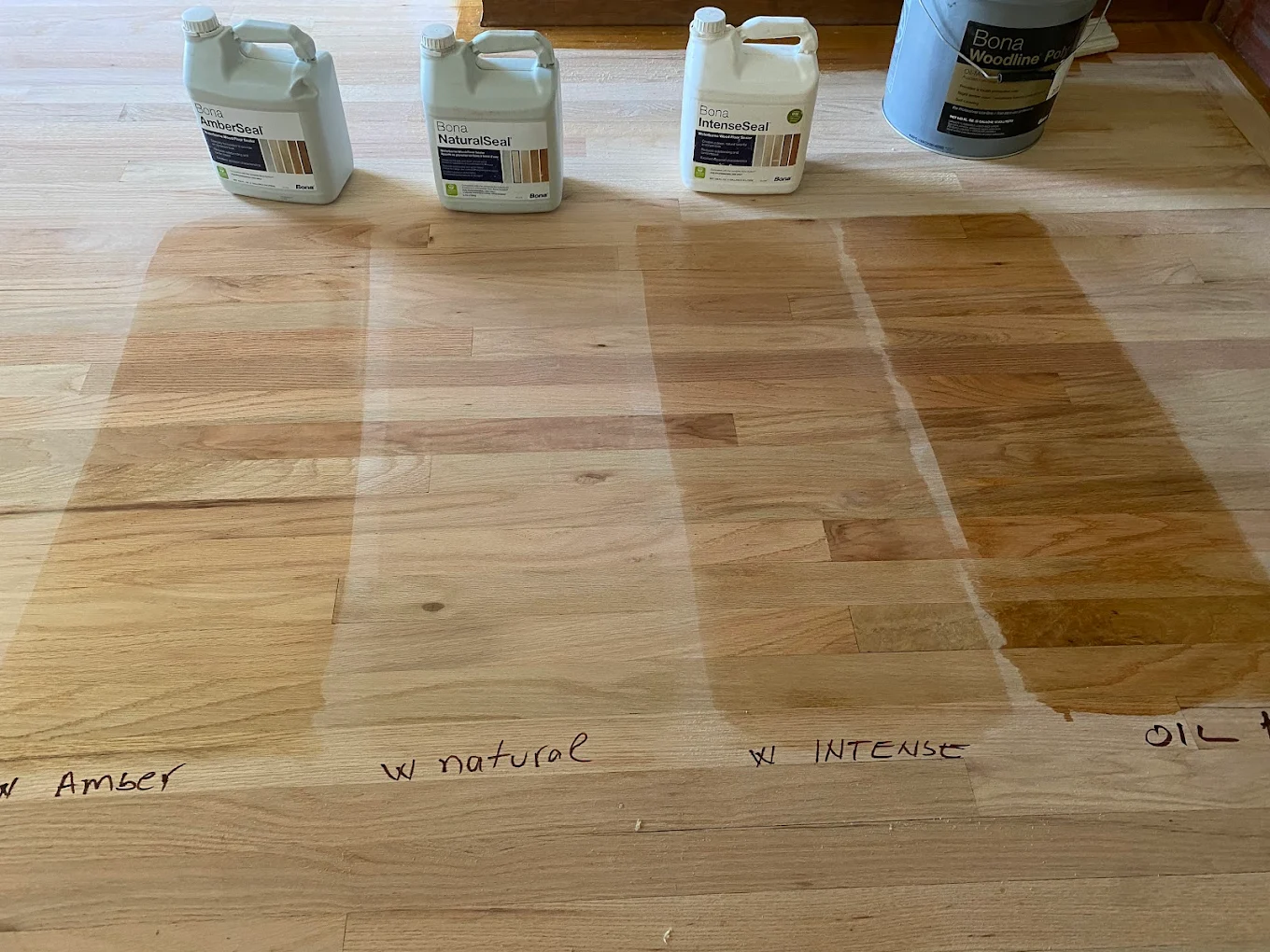
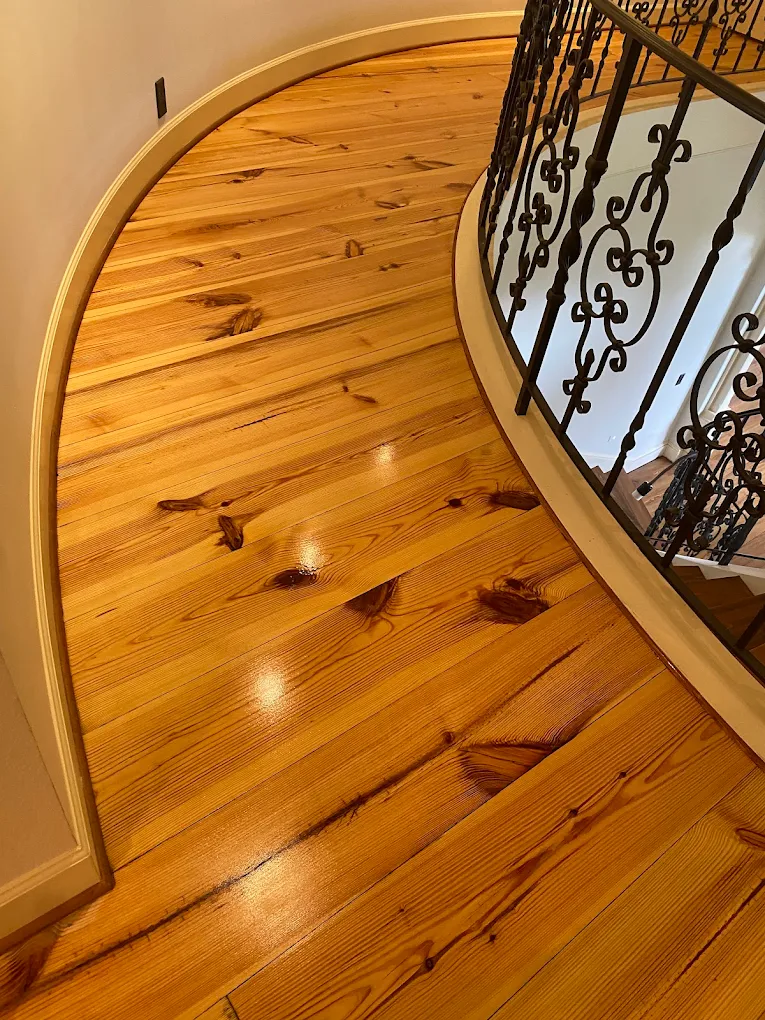
- Yellowing and aesthetics: Oil-based finishes naturally yellow or "amber" over time, turning wood floors a dark orange color. Waterborne finishes stay completely clear, preserving the natural color of species like white oak or maple.
How to dry and cure wood floor finishes in Oregon winters
Refinishing floors during a rainy Portland winter requires careful management. Because relative humidity is high, the water in a waterborne finish takes longer to evaporate. If the air is saturated, the finish cannot dry.
We follow these guidelines on every winter project:
- Maintain heating: We keep the home's heating system running at a stable 65°F to 70°F. This warms the wood and the air, allowing the water to evaporate.
- Dehumidification: We place commercial dehumidifiers in the work zone to pull moisture out of the air, keeping the relative humidity below 50%.
- Air movement: We set up high-velocity fans to circulate air across the floors. This breaks the boundary layer of humid air above the wet finish, accelerating drying times.
- Avoid cold drafts: Opening windows to air out the house in winter is a mistake. Cold, damp air slows the cure and can cause the finish to dry unevenly or turn cloudy.
Safe for pets and children
Pets and young children are particularly vulnerable to poor indoor air quality.
- Proximity to the floor: Dogs and cats breathe in air that sits directly above the floorboards. If you use a high-emission finish, they are breathing in concentrated solvent vapors.
- Paw absorption: Pets groom themselves by licking their paws. Any chemical residues left on the floor surface can be ingested directly.
- Small lung capacities: Children and pets have smaller lungs and faster breathing rates than adults, meaning they absorb airborne toxins much more quickly.
Because we use GREENGUARD Gold certified waterborne finishes, your home remains safe and breathable. There are no toxic residues or chemical films, so your family can return to the space with complete peace of mind.
Frequently asked questions
Do we need to move out during a waterborne refinishing project?
For waterborne refinishing, you do not need to move out of your home. You will need to stay off the floors while they are wet (typically 3 hours per coat), but because there are no toxic fumes or lingering odors, you can sleep in your home the same night the project is completed.
How soon can pets walk on the floors?
We recommend keeping pets off the floors for at least 24 hours after the final coat is applied. This allows the finish to reach 90% of its full cure. When they do return, ensure their claws are trimmed and filed to prevent surface scuffs.
Does the finish have a strong smell?
Waterborne finishes have a very mild, non-offensive odor that is similar to latex paint. The smell is completely gone once the finish dries (typically within 2 to 3 hours), unlike oil-based polyurethane which smells strongly of mineral spirits for weeks.
How do we clean waterborne finishes?
Clean your waterborne-finished floors with a soft microfiber mop and a pH-neutral cleaner (like Bona Hardwood Floor Cleaner). Avoid steam mops, vinegar, ammonia, or wax-based cleaners, as these will dull or damage the protective finish.
Ready to upgrade your home?
If you are planning to refinish your hardwood floors this season, request a free quote. We will walk you through the process, measure your room's baseline parameters, and show you why our eco-safe standard is the best choice for your home. To learn more about our wood floor preparation process, view our guide on dustless sanding and our project timeline guide.
Topics