How Portland's winter humidity affects hardwood expansion
How Portland's seasonal relative humidity cycle shifts floorboards, why cupping and gaps occur, and the exact digital moisture meter and acclimation steps we take to prevent them.
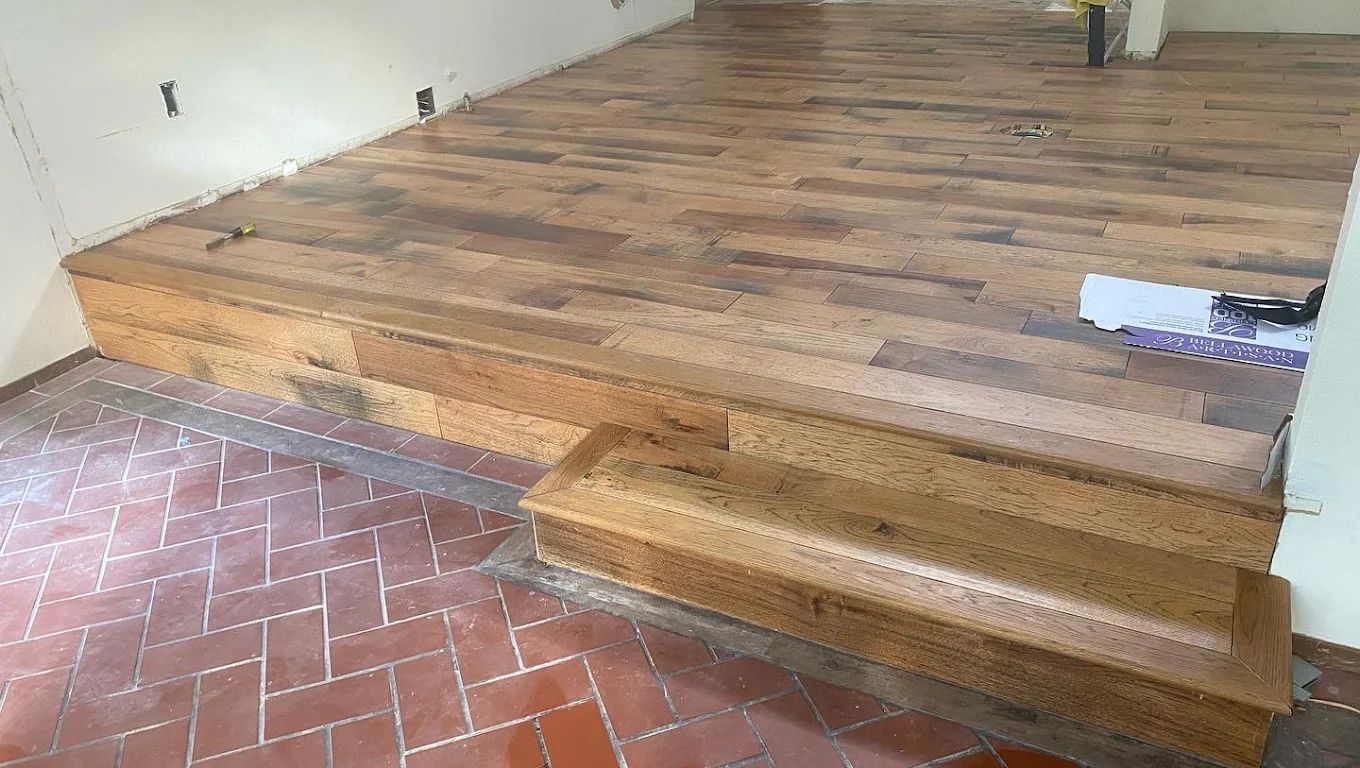
For Portland homeowners, hardwood floors represent a lifetime investment. But our unique Pacific Northwest climate—marked by damp, rainy winters and hot, bone-dry summers—creates constant, invisible physical forces that affect your wood flooring every single day.
Understanding how Portland’s seasonal humidity fluctuations affect hardwood floor expansion is key to keeping your floors flat, tight, and beautiful for decades.
Here is a look at the science behind wood floor movement in the Rose City, and the exact steps we take on every project to prevent issues like cupping, crowning, and seasonal gapping.
The science: why wood floors breathe
Wood is a hygroscopic material. This means it acts like a natural sponge, absorbing and releasing moisture to stay in balance with the surrounding air. In scientific terms, this relationship is governed by the concept of Equilibrium Moisture Content (EMC).
When the air's temperature and relative humidity shift, the wood's moisture content will automatically adjust to match it. As indoor relative humidity (RH) rises during our damp Oregon winters, wood flooring absorbs water vapor from the air and expands. When summer arrives and the air dries out, the wood releases that moisture and shrinks.
This movement is entirely normal, but it becomes problematic when the moisture changes are too rapid, uneven, or extreme. Because wood is anisotropic (it expands and contracts differently along different axes), moisture changes can cause planks to warp, cup, or gap.
Technical details: shrinkage and hardwood species
Different wood species react to Portland's climate changes in different ways. This is measured by the dimensional stability coefficient (or shrinkage values). Wood moves far more across the grain (tangentially and radially) than it does along the length of the board (longitudinally).
Below is a comparison of how common Pacific Northwest flooring species react to moisture:
Douglas fir, which is incredibly common in historic Portland homes built before 1950, is softer but relatively stable once acclimated. However, because it is soft, it is highly susceptible to physical wear. Hard maple is very dense and beautiful, but it is notorious for being less stable, meaning it will show gaps and expansion cracks much more readily if indoor humidity is not carefully controlled. American walnut and red oak are among the most forgiving species when it comes to seasonal movement.
Portland's seasonal humidity cycle
In the Pacific Northwest, we see two distinct risk zones for hardwood movement:
1. The winter expansion phase (November - April)
With months of continuous rain, outdoor humidity in Portland sits near 80-90%. Indoors, the air is naturally wetter, but heating systems dry it out to some degree. In a typical crawlspace or unconditioned basement, humidity spikes. This causes the bottom of the wood planks to expand faster than the top, leading to cupping (where the edges of the boards rise higher than the center).
2. The summer shrinkage phase (July - September)
Portland summers are dry and warm. As relative humidity drops, hardwood planks shrink. If the floors were installed or sanded when the wood was too wet, this shrinkage creates wide gaps between the boards.
Equilibrium moisture content (EMC) calculations
To understand how wood behaves in your home, we look at the relationship between indoor temperature, relative humidity, and EMC. Below is a reference table showing the wood's target moisture content based on typical home climates:
Our target moisture content for Portland homes is 6% to 9%. If the wood reads higher than 10%, we stop and wait.
Subfloors and basements: the hidden moisture pathways
Many homeowners focus solely on the air quality inside their living rooms, but the real driver of wood floor cupping and expansion issues is often underneath the floor. Subfloors act as a bridge between the conditioned space of your home and the unconditioned space of your crawlspace or basement.
Crawlspace vapor barriers
In Portland, many older bungalows have dirt-floor crawlspaces. As rain falls throughout the winter, the soil beneath your home becomes saturated. This moisture evaporates into the crawlspace air, rising upward toward your hardwood floors. If you do not have a professionally installed vapor barrier (usually a minimum 6-mil polyethylene sheet overlapping at the seams), this moisture will continuously feed the underside of your floorboards, causing chronic winter cupping.
Concrete slab installations
For homes in areas like West Linn, Wilsonville, or Beaverton built on concrete slabs, the concrete itself is a major moisture source. Concrete is porous and absorbs ground moisture, which it then releases upward. Installing hardwood directly over concrete without a high-quality moisture mitigation system (such as a roll-on epoxy membrane or specialized underlayment) is a recipe for complete flooring failure.
How we prevent expansion issues at FloorsPDX
Because we are local craftsmen who live and work in Portland, we don't guess at moisture levels. We follow a strict three-step protocol on every refinishing and installation job:
Step 1: digital moisture meter tracking
Before we drop a single sander on your floor or nail down a new plank, we test the wood's moisture content. We use professional pinless meters that scan deep into the wood without damaging the surface.
- We check the flooring planks in multiple spots across the layout.
- We test the plywood subfloor underneath to ensure it is dry.
- We test the joists in the crawlspace or basement below.
Our target moisture content for Portland homes is 6% to 9%. If the wood reads higher than 10%, we stop and wait.
Step 2: on-site acclimation
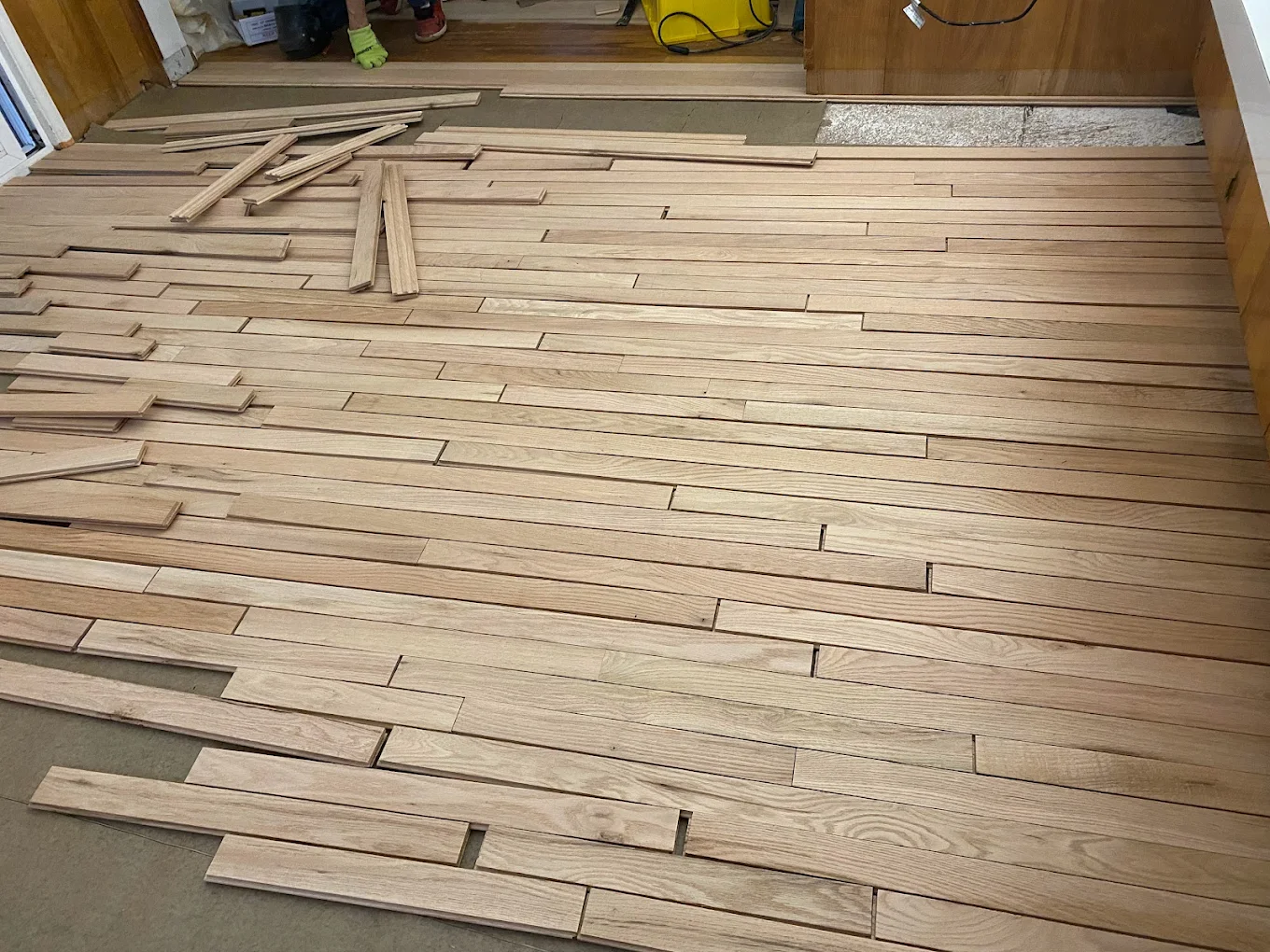
For new installations or repairs, we never install wood straight from the truck. We stack the hardwood boards inside the room where they will live, with space for air to circulate, and let them sit for at least 5 to 7 days. This allows the wood to achieve equilibrium moisture content (EMC) with your home's unique microclimate.
Step 3: climate control recommendations
We help homeowners establish a baseline environment. Keeping your indoor relative humidity between 35% and 55% year-round is the sweet spot for hardwood floors. We recommend using a humidifier during the dry summer months and utilizing crawlspace vapor barriers to block rising winter dampness.
Year-round care checklist for Portland homeowners
To keep your hardwood floors stable throughout the year, follow this simple maintenance schedule:
Spring and fall: the transitions
- Monitor humidity: Use a cheap digital hygrometer to monitor indoor humidity. It should hover around 40-50%.
- Inspect crawlspace: Ensure crawlspace vents are open and clear of debris to allow air movement.
- Check gutters: Downspouts should direct rainwater away from your home's foundation to prevent subfloor dampness.
Winter: the damp season
- Manage heating: Forced-air heating can dry out the air. If relative humidity drops below 35%, use a humidifier to prevent dry-gapping.
- Control basement dampness: Run a dehumidifier in unconditioned basements or crawlspaces if moisture levels rise above 60%.
- Wipe wet shoes: Stop rain and snow at the door to prevent water from pooling on the floorboards.
Summer: the dry season
- Use air conditioning: A/C acts as a natural dehumidifier, keeping indoor humidity stable even during summer heatwaves.
- Minimize sunlight: Direct afternoon sun can bake wood floors, causing local drying and color fading. Use blinds or UV-filtering window films.
Frequently asked questions
Why did my floors start squeaking in the winter?
Squeaks are often caused by the wood expanding and rubbing against the subfloor fasteners or adjacent boards. In winter, as the boards absorb moisture, they expand and tighten. If there is any movement in the subfloor or if the boards were nailed down too loosely, the friction produces squeaks. Running a dehumidifier to stabilize the crawlspace moisture can often help quiet these boards.
What is the difference between cupping and crowning?
- Cupping occurs when the bottom of the floorboard has more moisture than the top. The edges of the board rise, creating a concave shape.
- Crowning is the opposite. It occurs when the top of the board has more moisture than the bottom (usually due to a surface spill or high indoor humidity), causing the center of the board to swell and bow upward.
Can cupped floors be sanded flat?
Never sand a cupped floor while it is still wet. If you sand the raised edges flat before the wood dries, the board will eventually shrink back to its normal shape when it dries, leaving the center of the board permanently dished (crowned). You must always address the moisture source first, let the floor dry back to its normal flat state, and then evaluate whether sanding is necessary.
How long does wood acclimation take in Portland?
For solid hardwood, acclimation typically takes 5 to 7 days. For engineered hardwood, it is usually 2 to 3 days. The wood must be stored in the conditioned space of the home, not in a garage or damp basement. The boxes should be opened and stacked in a log-cabin style to allow air to reach all sides of the planks.
Ready to restore or install your floors?
If you notice gaps, cupping, or soft spots in your hardwood floors, it’s best to address it before the next seasonal shift. Get a free quote to schedule a walkthrough. We’ll measure your floor's moisture content and give you an honest assessment of the best path forward. For more details on our process, view our guide on how long refinishing takes and dustless sanding benefits.
Topics