Refinishing hardwood stairs in Portland: treads, risers, and what it really takes
A staircase is 60 square feet of wood that takes as long to refinish as several hundred square feet of floor. Why stairs are hand work, what carpet removal uncovers, how we match stain and sheen to your floors, and how stair projects are quoted.
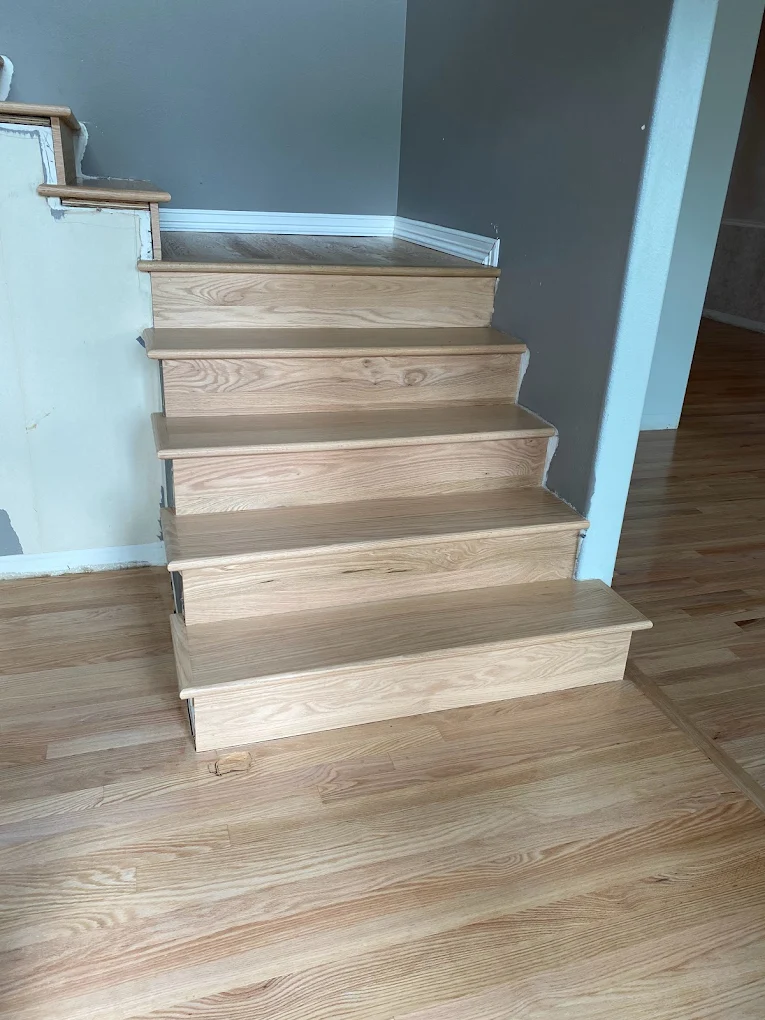
Stairs are the part of a refinishing project most homeowners underestimate. A typical Portland staircase is maybe 60 to 80 square feet of wood, yet it routinely takes as long to refinish as several hundred square feet of open floor. Here is what the work actually involves, based on the staircases we sand, repair, and finish across Portland every month.
Why stairs are hand work
On an open floor, our big machines do the heavy lifting. A drum or belt sander takes the field down to bare wood in long passes, and an edger handles the perimeter. None of that equipment fits on a staircase.
Every tread gets sanded individually with an edger, an orbital sander, and in the corners, a scraper and sandpaper in someone's hand. The rounded front edge of each tread, called the nosing, has to be sanded by hand or it loses its shape. Then the whole sequence repeats at each grit, on each step, usually 12 to 14 times per flight.
A single flight of stairs is essentially 13 small refinishing projects stacked on top of each other. That is the honest reason stairs cost more per square foot than flat flooring.
Treads, risers, and handrails are three different jobs
A staircase is not one surface. It is three, and each one gets treated differently.
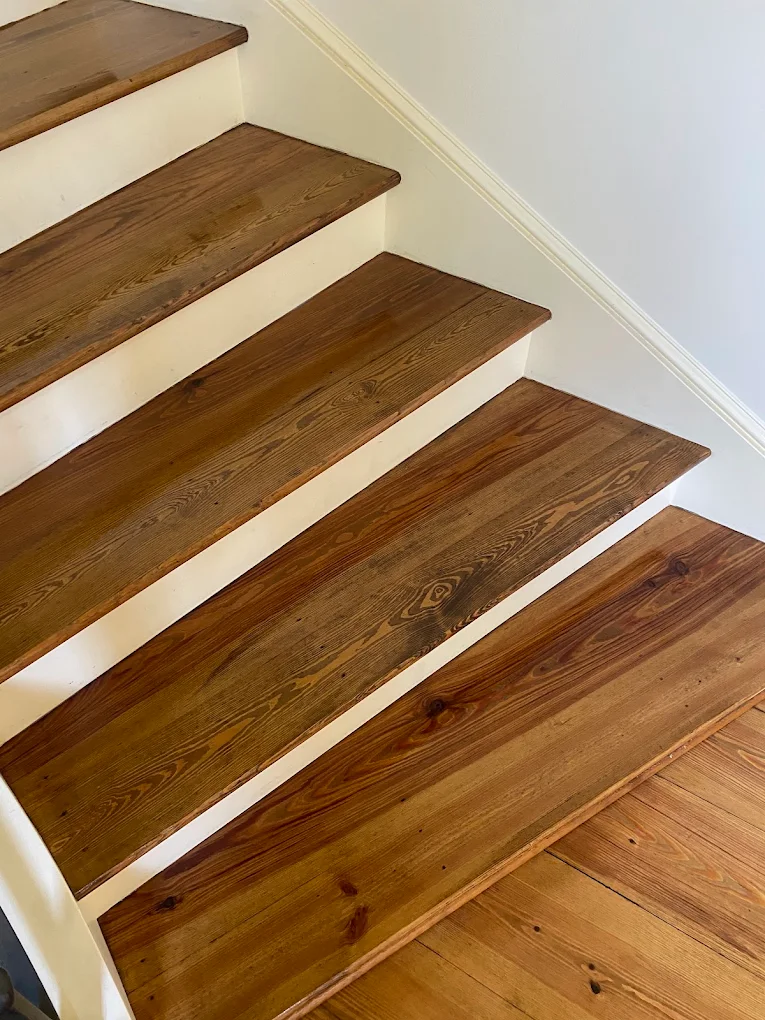
Treads are the horizontal boards you step on. They take all the wear, so they get the full treatment: sanded to bare wood, stained if you want color, and coated with the most durable finish in the system. On older Portland homes the treads are usually solid oak or fir, thick enough to be refinished several times.
Risers are the vertical boards between treads. They take almost no wear, and in most Portland homes they look best painted. A crisp white riser against a stained tread is the classic look in Craftsman and Foursquare houses, and it is the practical choice too, because paint touch-ups are easy while stain touch-ups are not. Stain-grade risers to match the treads are doable, they just add sanding time.
Handrails, newel posts, and balusters are entirely hand work. There is no machine that sands a turned baluster, so the rail system is often the slowest single item on the job. Plenty of homeowners refinish treads and risers now and leave the rail for a later phase, which is a reasonable way to manage the budget.
Matching stairs to newly refinished floors
The most common version of this project is not stairs alone. It is a full hardwood refinishing job on the main floor, with a staircase that needs to land in the same color family.
Two things make the match harder than it sounds. First, the species may not be the same. We see plenty of Portland homes with old-growth fir floors and oak stair treads, or the reverse hiding under carpet. The same stain reads differently on different species, so we adjust the stain on the stairs, not the floors, until they sit together.
Second, sheen has to match too. A satin floor next to semi-gloss treads looks off in a way most people cannot name but everyone notices. We finish stairs in the same sheen and the same product line as the floor whenever possible.
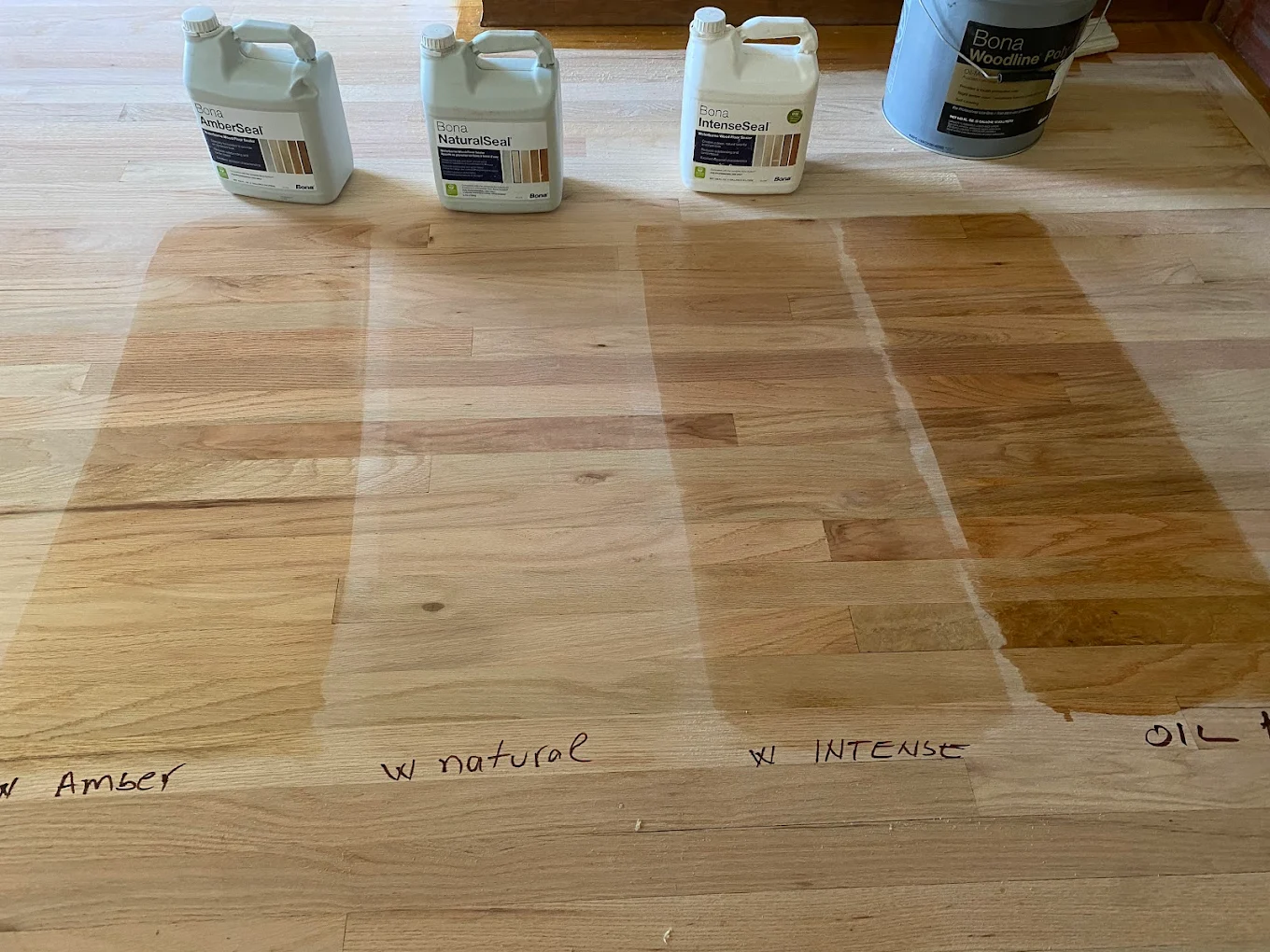
We always test stain directly on a sanded tread, in your light, before committing. If you are still deciding on color, our guide to the best stain colors for Portland hardwood floors covers what is working in local homes right now.
Pulling carpet off stairs: what we usually find
Half the staircases we refinish start out under carpet. Here is what is usually underneath.
- Staples. Hundreds of them. Carpet pad is stapled every few inches, and every staple either comes out clean or leaves a small hole. We pull them all, then fill the holes with color-matched filler before sanding. On a full flight this alone can take a couple of hours.
- Tack strips and their nail holes along the back and sides of each tread.
- Paint. Painters rarely cut in carefully next to carpet, so the outer inches of each tread are often painted or splattered. Paint sands off, but it loads up sandpaper fast and adds time.
- Construction-grade treads. Occasionally the builder never intended the stairs to be seen, and under the carpet is soft, gouged fir or plywood that will not take a nice finish. The better path then is new oak tread caps or replacement treads, which falls under our hardwood floor repair work. We will tell you on day one, not after sanding.
None of this is a reason to keep the carpet. It is just why we cannot quote a carpeted staircase precisely without lifting a corner and looking.
Thinking about your own staircase? Request a free quote and we will walk the stairs with you, lift a carpet corner if needed, and give you a clear written price before any work starts.
Durability and safety on high-traffic treads
A stair tread concentrates more wear per square inch than any floor in the house. Everyone steps in the same spot, on the nosing, every trip.
For treads we use the same commercial-grade waterborne finishes we put on high-traffic floors, in three coats, and we keep the sheen at satin or matte. Lower sheen hides the micro-scratches that show up first on the nosings, so the stairs look good longer.
Safety deserves a plain mention. Finished wood treads are more slippery than carpet, full stop. For households with young kids, older family members, or dogs that take the stairs at full speed, we can add a fine anti-slip grit additive to the final coat on the treads. It is nearly invisible in a satin finish and adds real traction. Not every home needs it, but it costs little and we would rather bring it up than not.
What the timeline looks like
A straight flight of 12 to 14 treads, refinished on its own, typically runs 2 to 3 working days plus cure time. Carpet removal and staple repair can add a day. A rail system adds one to two more.
The scheduling question that matters most: if your bedrooms are upstairs, the stairs are your only path to bed. For occupied homes we can coat alternating treads so half the staircase is always usable, which adds a day but means nobody sleeps on the couch.
When stairs are part of a whole-house project, they usually add one to two days to the total. Our post on how long hardwood refinishing takes in Portland covers the full project rhythm day by day.
How stairs are quoted
Flat flooring is quoted by the square foot. Stairs are quoted per tread and per riser, because the labor lives in the count of steps, not the area.
Typical ranges we see on Portland projects: refinishing runs roughly $45 to $95 per tread depending on condition, stain work, and access. A full straight flight with painted risers usually lands between $900 and $2,500 all-in. Carpet removal with staple and hole repair adds a few hundred dollars. New tread caps, where the old treads are not worth saving, typically run $100 to $250 per tread installed. Handrails and balusters are quoted separately because the hand-work varies so much between rail styles.
Those ranges are context, not a quote. Every staircase we price gets a walkthrough first, because the difference between a clean oak flight and a painted, carpeted, staple-riddled one is real money, and you deserve a number based on your actual stairs.
Ready to see what is under that carpet?
If your staircase is worn, painted, or hiding under 30-year-old carpet, we are happy to take a look. Request a free quote and Vasi will walk the project with you, explain what your stairs need, and send a clear written estimate, usually within a day or two. You can also reach us directly at 503-388-1689. CCB #227332.
Frequently asked questions
Can I refinish stairs myself to save money?
You can, but stairs are the least DIY-friendly refinishing project in the house. There is no machine rental that helps much, every step is hand and edger work, and mistakes like a rounded-over nosing or blotchy stain sit at eye level every time you walk in the door. Most homeowners who price out their own time end up hiring out the stairs even when they DIY a bedroom.
Do the stairs have to match my floors exactly?
They should match closely in color and sheen, but "exactly" is often impossible when the stairs and floors are different wood species, and that is normal. We adjust the stain on the stairs until the two read as one continuous color in your home's light, and painted risers break up the surfaces visually, which makes small differences disappear.
Is it safe to have finished wood stairs with kids or dogs?
Yes, with sensible choices. We recommend a satin or matte sheen, which offers more traction than gloss, and we can add an anti-slip grit additive to the final coat that is nearly invisible but noticeably grippier. A securely fastened runner is also a fine option once the finish has fully cured.
How long before we can use the stairs after finishing?
With the waterborne finishes we use, treads accept careful sock-foot traffic a few hours after the final coat, and normal daily use within a day or two. Full cure takes about two weeks, so hold off on runners and on moving furniture up or down the stairs during that window. If the stairs are your only route to bedrooms, we can finish alternating treads so the staircase stays usable throughout.
Topics