Best stain colors for Portland hardwood floors (2026)
What is winning in Portland hardwood stain choice this year, broken down by neighborhood aesthetic and home era. Plus the 3 stain mistakes we prevent on every walkthrough.
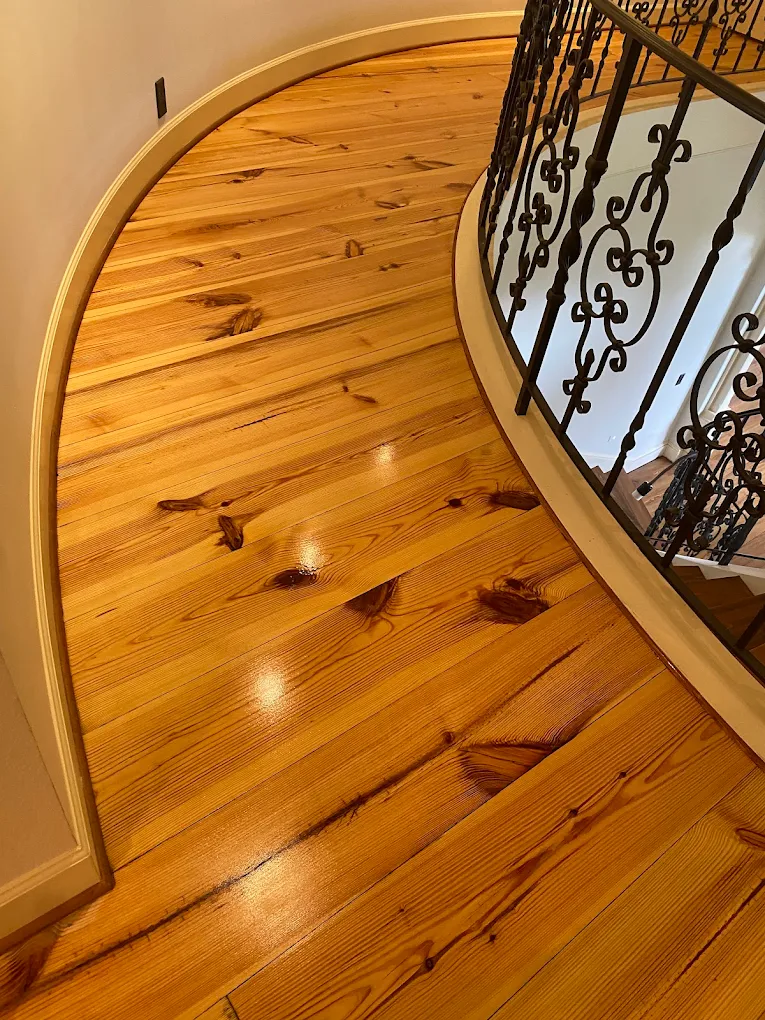
The single most-asked question on every refinishing walkthrough we do is some variation of: "what color should we go?" It is the most fun part of the project - and the most permanent. The stain you choose lives with your home for the next 7-15 years, gets photographed every time you list, and shapes the way every piece of furniture in the room reads.
Here is what is actually working in Portland-area homes right now, broken down by neighborhood aesthetic and home era.
The trend right now: warm naturals are winning
After a decade where gray-wash and weathered finishes dominated Pinterest, Portland's hardwood market has pivoted hard back to warm, mid-tone naturals. The 2024-2026 buyer market in Sellwood, Alameda, and most of inner Portland responds best to:
- Natural (no stain - just the raw oak with a clear finish) - clean, modern, photographs well in any light
- Special Walnut - warm but not heavy; works on both craftsman and mid-century homes
- English Chestnut - slightly redder than Special Walnut, popular in Eastmoreland and Hawthorne restorations
- Golden Pecan - warm honey tone that suits 1980s-2000s suburban homes in Beaverton and Hillsboro
Gray-wash and weathered-oak finishes are still in the mix for very modern contemporary builds, but they have lost ground in the broader resale market. If your goal is to sell in the next 24 months, mid-tone natural finishes carry less style risk.
Stain choice by home era
The single most reliable stain decision is matching what the home wants to be, not what is trending. Here is what works by housing era across Portland Metro:
1900s-1930s craftsman bungalows
Best stains: Special Walnut, Provincial, Jacobean (for true historic restoration) Why: These homes were originally finished in dark, oil-rubbed tones. Going lighter than Special Walnut on a craftsman with original trim and built-ins creates a visual mismatch - the floor reads "renovated cheaply" instead of "loved and maintained." Most of our Portland and Oregon City historic-home work goes Special Walnut or Jacobean.
1940s-1960s mid-century
Best stains: Natural, Golden Pecan, Provincial Why: Mid-century homes were built around lighter, brighter interiors. Heavy walnut tones fight the architecture. Natural with a satin finish photographs particularly well on the long open layouts common in Mount Tabor and Multnomah Village.
1970s-1990s ranches and split-levels
Best stains: Special Walnut, English Chestnut, Gunstock Why: This era of homes was originally carpeted, so there is no "original" floor color to match. The stain choice is purely market-driven. Mid-tone warmth photographs well across most Cedar Hills, Tigard, and Tualatin listings.
2000s-2020s new construction
Best stains: Natural, Golden Wheat, weathered-oak finishes Why: Newer homes have open floor plans and light-flooded great rooms. Lighter stains keep the space feeling expansive. Happy Valley, Bethany, and Orenco Station listings consistently outperform with lighter natural finishes.
Waterfront and lakeside (Lake Oswego, Camas)
Best stains: Special Walnut, Dark Walnut, custom-blended warm browns Why: Lake Oswego and Camas, WA waterfront homes carry an estate aesthetic that supports darker, richer floors. The dark tones contrast nicely with the white trim and lakeside light most of these homes were designed around.
What stain choice changes (and what it does not)
A common misconception: stain choice does not affect the durability or longevity of your floor. The finish coat does that. Stain affects:
- Color depth and warmth
- How dust and pet hair show (darker stains show dust more visibly)
- How the room reads in photographs (mid-tone naturals are most camera-forgiving)
- Resale value (when matched to the home era - a wrong stain choice can actively hurt resale)
Stain does not affect:
- Lifespan of the finish (that is the topcoat)
- Susceptibility to scratches (also the topcoat)
- Refinishing potential later (you can always strip and restain)
Ready to transform your floors? Get a free quote today to schedule a consultation and see how we can bring your vision to life.
How we pick the right stain with you
Every refinishing project we do includes a free in-home stain test. Here is how it goes:
- You pick 3-4 candidate stains from samples we bring (or we recommend based on your home era).
- We apply each stain to a 12-inch test patch on your actual floor - usually a closet or under-rug area.
- We let the test cure for 24 hours so you see the true cured color, not the wet color (these can be 30% different in some stains).
- You walk through with us, in your home's actual light, at the actual time of day you live in the house. Pick the one that wins.
This step adds a half-day to the timeline but eliminates 100% of stain-regret risk. We never apply a final stain without an approved on-site test.
Stain mistakes we see (and prevent)
Three stain decisions cost Portland-area homeowners money over and over:
1. Picking from a Pinterest photo. Pinterest images are color-corrected, taken in golden-hour light, on different oak grain than yours. The stain that looks dreamy online almost never reads the same on your specific floor.
2. Going darker than your home wants. Dark Walnut and Jacobean look great in showroom photos. In a Beaverton ranch with low-ceiling rooms, they make the space feel smaller and dated.
3. Skipping the test. Some homeowners ask us to just match a sample card. We always push back. Same stain reads completely different on red oak vs white oak vs Doug fir, and Portland-area homes have all three.
Stain matching for repairs and partial work
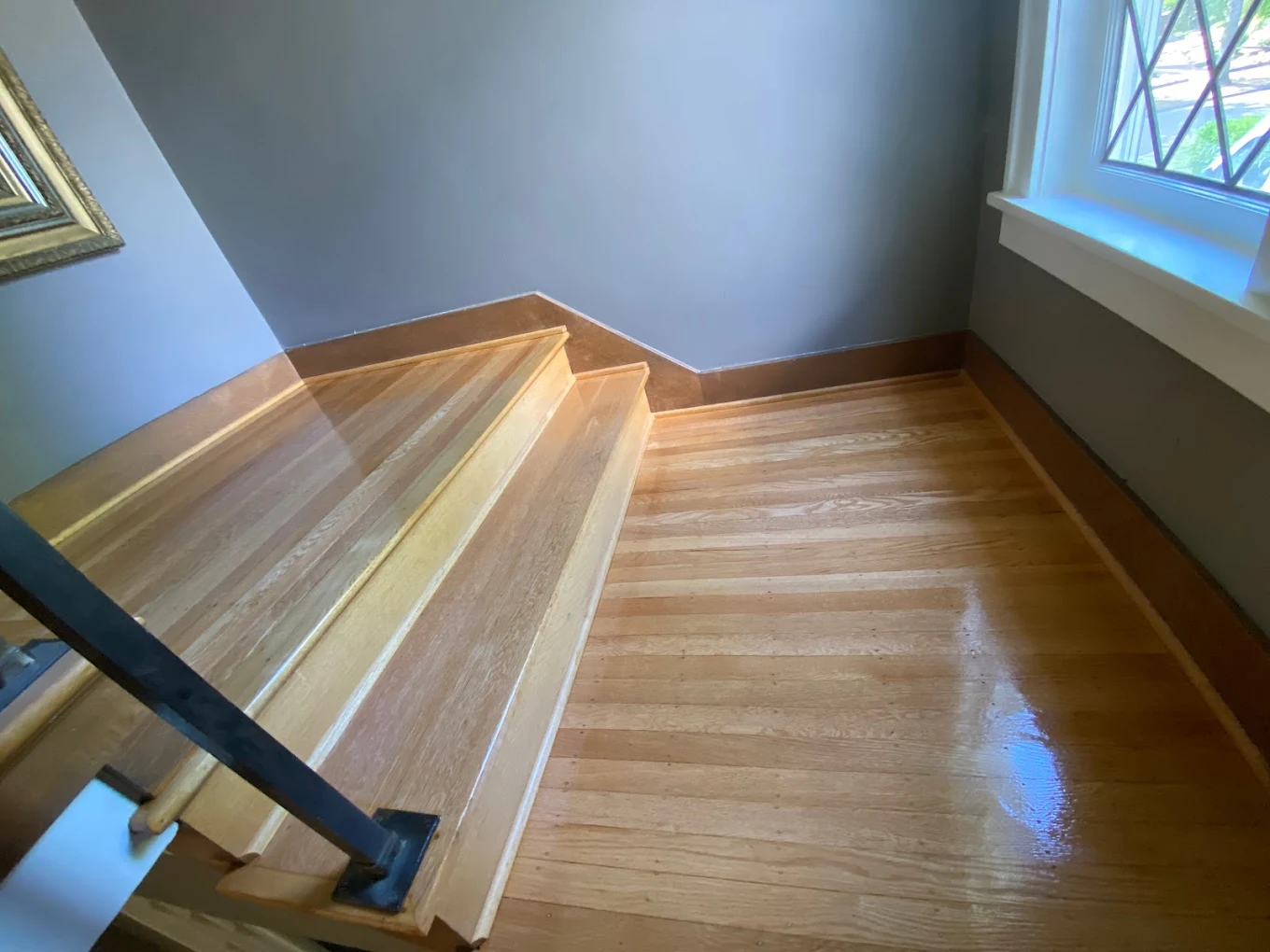
If you are not refinishing the entire floor - just patching a damaged area or extending an existing floor into an addition - stain matching is its own skill. We blend three or more stain swatches on test boards in our shop, bring them to your home, and let you compare to your existing floor in your light. Getting a stain blend that disappears into a 30-year-old floor is harder than picking a fresh stain from a fan deck, and we charge for the time, but it is the difference between a repair that looks new and a repair that looks like a repair.
Get a stain consultation
Stain choice is part of every quote we provide. When you request a free quote, we walk through your home, talk through your aesthetic goals, and recommend 3-4 candidate stains for the on-site test. No upcharge, no pressure.
Call 503-388-1689 and ask for Vasi, or use the free quote form. For more on what the full refinishing process looks like, see how long refinishing takes and refinish vs replace.
Topics