2026 hardwood floor refinishing cost in Portland, OR: $2.50–$6.95/sqft
Transparent 2026 Portland hardwood refinishing costs: $2.50–$3.75 buff and coat, $4.99–$6.95 full dustless refinish, $5.95–$6.95 custom stain. Free written estimates.
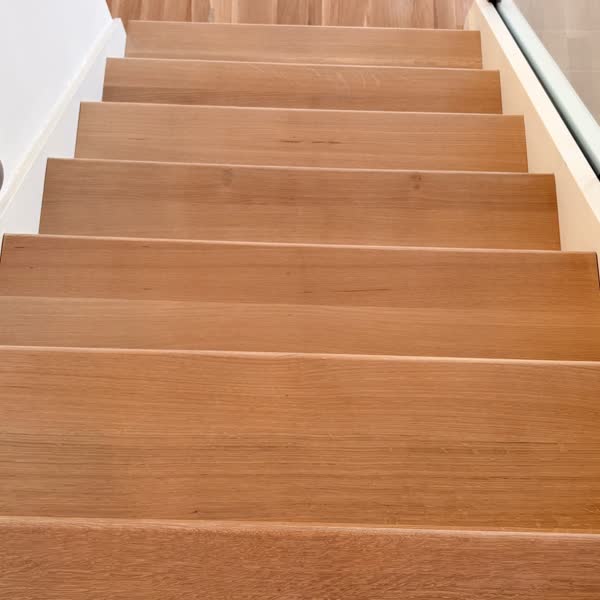
Hardwood floor refinishing in Portland costs $4.99 to $6.95 per square foot for 99.8% HEPA dustless sanding, custom stain/sealer, and 3 coats of commercial Bona Traffic HD waterborne finish. A typical 1,000 sq ft home costs $4,990 to $6,950. Stair treads average $90–$150 per step.
When homeowners call us to discuss refreshing their hardwood floors, the very first question is almost always: "How much is this going to cost?"
It makes complete sense. Whether you are prepping a historic Craftsman bungalow in Sellwood for the market, restoring a mid-century modern ranch in Beaverton, or updating a family home in Tigard, budgeting is a critical part of the process.
The short answer is that in 2026, the average cost to refinish hardwood floors in the Portland metro area ranges from $4.99 to $6.95 per square foot. For a standard 1,000-square-foot project, you can expect to invest anywhere from $4,990 to $6,950.
However, floor refinishing is not a one-size-fits-all service. The final price depends on a variety of factors, including:
- The species of wood
- The layout of your home
- The condition of the subfloor
- The type of finish you choose
Here is a detailed breakdown of what goes into hardwood floor refinishing costs in Portland, helping you understand where your money goes and how to plan your project budget.
Average cost breakdown by service type
To give you a clearer picture, let us look at the typical price ranges for different refinishing services in our local market:
Basic sand and finish (natural): $4.99 – $6.00 per square foot
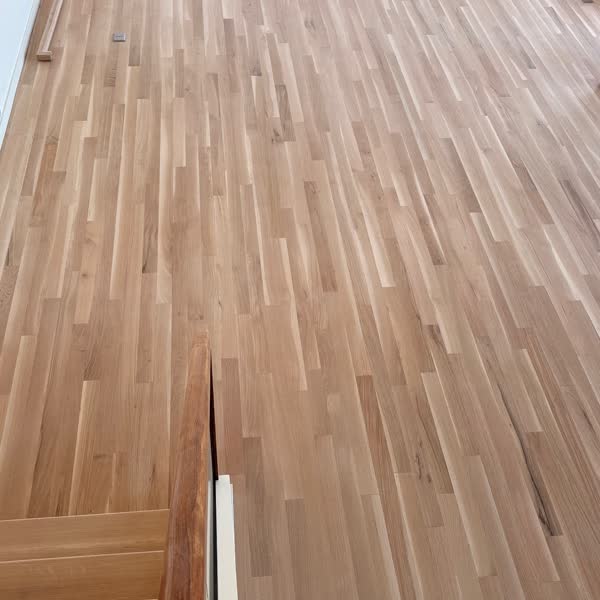
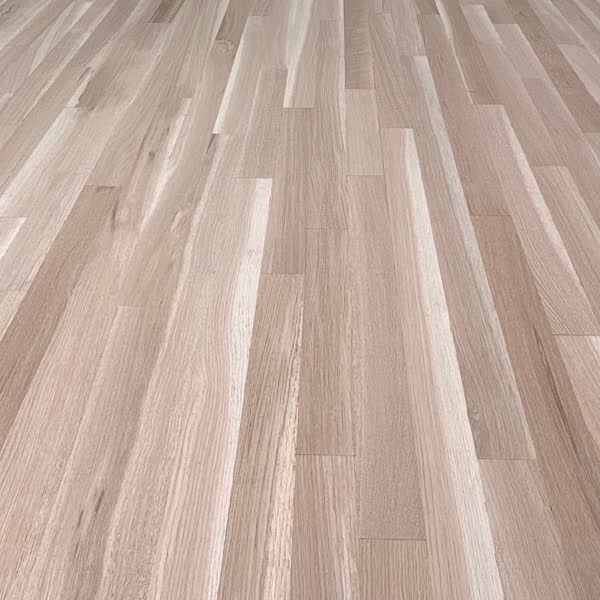
This is the baseline service. It includes sanding the wood down to its raw state, buffing it smooth, and applying three coats of high-quality clear finish (usually a water-based polyurethane). Note: This option does not include any stain; the natural color and grain of your wood will show through. It is highly popular for maple, white oak, and light-filled mid-century homes.
Sand, stain, and finish: $5.00 – $6.95 per square foot
If you want to change the color of your floors—whether you are looking for a deep walnut tone in an Irvington Craftsman or a warm honey hue in a Cedar Hills ranch—you will need a stain. Staining adds an extra step to the process. We must apply the stain evenly after sanding, let it cure, and then apply the clear topcoats. The extra labor and material costs account for the higher rate.
Stair refinishing: $90 – $150 per step
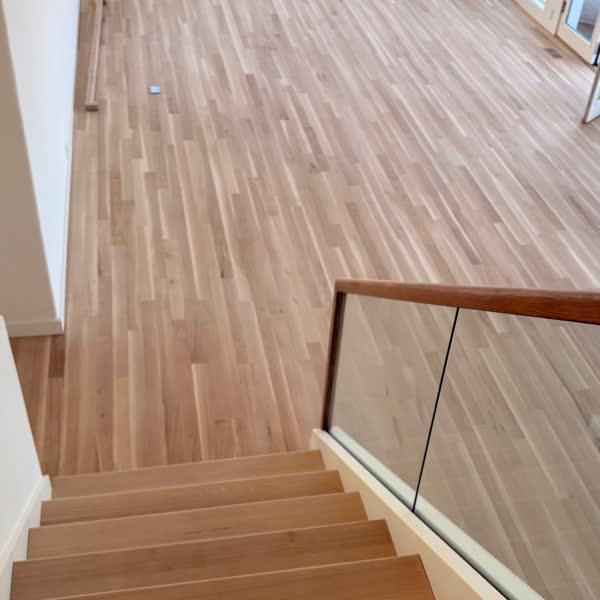
Stairs are incredibly labor-intensive. Because our large belt sanders cannot fit on individual treads, stairs must be sanded almost entirely by hand using small handheld edgers and scrapers. The price is calculated per step rather than by square foot. If your stairs also have painted risers that need to be stripped and stained, the price will lean toward the higher end of the scale.
Deep scratch and damage repair: $80 – $120 per hour (plus materials)
If your floors have deep gouges, water stains from house plants, pet urine damage, or missing boards from a wall removal, we will need to perform repairs before sanding. This often involves sourcing matching historic wood boards, cutting out the damaged sections, and weaving in the new wood so the repair is invisible.
Key cost drivers for Portland hardwood refinishing
Two homes of the exact same square footage can have different refinishing costs. Here are the major factors that influence the final estimate:
1. Wood species and sanding difficulty
Different wood species behave differently under a sander:
- Red oak and white oak: These are the most common hardwoods. They sand predictably and absorb stain evenly, making them the standard rate baseline.
- Douglas fir: Found in many pre-WWII Portland homes, Douglas fir is a soft wood. It requires a gentle touch and specialized sanding techniques to avoid gouging. Fir also tends to clog sanding paper quickly due to its natural sap content, which can increase material usage and labor time.
- Maple: Maple is a very dense hardwood with a tight grain. It is notoriously difficult to stain evenly, often absorbing color in patches. To get a high-quality finish on maple, we have to perform a process called "water popping" before staining. This extra step adds labor cost.
2. Home layout and accessibility
A wide-open, single-level floor plan is much easier to sand than a multi-story home with small rooms, closets, hallways, and transitions.
- Open layouts: A 1,500-square-foot ranch home in Hillsboro or Beaverton allows us to run our heavy machinery continuously, reducing the time required to complete the project.
- Segmented layouts: A historic 1,500-square-foot home in Eastmoreland or Mount Tabor with small bedrooms, narrow hallways, built-in cabinetry, and multiple closets requires significant hand-sanding along the edges, which slows down the process and increases labor costs.
3. Current floor condition and old coatings
What is currently on your floors affects how hard we have to work to get them back to raw wood.
- Carpet and tack strips: If your hardwood is currently covered by carpet, the carpet and pad must be removed. The real work, however, is removing the thousands of staples and tack strips along the perimeter without damaging the wood.
- Adhesive or mastic: If old linoleum or tile was glued over the hardwood, we often find thick layers of black tar adhesive or yellow glue. Sanding through glue is slow, messy work that ruins sanding belts quickly.
- Wax and paint: Floors that have been heavily waxed or painted require extra sanding passes to strip off the build-up before we can reach the actual wood grain.
4. Choice of protective finish
The liquid coating that protects your wood is a major factor in both cost and longevity.
- Water-based polyurethane: We highly recommend commercial-grade water-based finishes (like Bona Traffic HD). While the product itself is more expensive, it dries in a few hours, allows you to return to your home faster, has virtually no smell, and does not yellow over time.
- Oil-based polyurethane: A traditional option that is cheaper upfront. However, it takes 24 hours to dry between coats, has a strong chemical smell that requires you to leave the house, and will amber (turn yellow/orange) as it ages.
- Hardwax oils: A premium option (like Rubio Monocoat or Osmo) that penetrates the wood fibers rather than sitting on top. It gives a matte, natural look and is easy to touch up in high-traffic zones, but it carries a higher installation cost.
Real-world cost examples in the Portland metro area
To help you visualize your project, here are three typical refinishing scenarios based on actual work we perform across Portland neighborhoods:
Scenario A: the Sellwood bungalow (historic restoration)
- Size: 1,100 square feet (living room, dining room, two small bedrooms, and hallway)
- Wood: Original 1920s Douglas fir under old carpet
- Services: Carpet removal, tack strip pulling, minor board repairs, natural sand (no stain), three coats of low-VOC water-based polyurethane.
- Average cost: $5,200 – $6,950
- Why: The combination of carpet removal and working with soft Douglas fir in a segmented historic layout places this project in the mid-to-high range per square foot, but saving the historic fir is worth every penny.
Scenario B: the Beaverton ranch (modern update)
- Size: 1,800 square feet (open great room, kitchen, long hallway, three bedrooms)
- Wood: Select red oak
- Services: Sanding, water-popping, custom mid-tone brown stain, and three coats of commercial-grade satin water-based finish.
- Average cost: $9,000 – $10,800
- Why: While the open layout makes sanding efficient, the addition of a custom stain and the large square footage keeps this in the higher total investment range.
Scenario C: the Lake Oswego estate (high-end custom)
- Size: 2,500 square feet (multi-level, entry foyer, formal dining, large living areas, plus 15 stairs)
- Wood: White oak
- Services: Sanding, custom double-stain finish (cerusing or wire-brushing look), stair refinishing, premium hardwax oil finish.
- Average cost: $14,500 – $18,000
- Why: Large square footage, complex stair work, and premium finishing materials make this a luxury project requiring specialized craftsmanship.
Hidden refinishing costs to plan for
When planning your budget, remember to account for these associated costs that might not be on your flooring contractor's invoice:
- Furniture moving: Sanding machines require completely empty rooms. If you cannot move your sofas, tables, and beds yourself, you will need to pay the flooring company or a professional moving crew to clear the space.
- Alternative lodging: While dustless sanding keeps your air clean, you still cannot walk on the floors while the finish is wet. Budget for a few nights at a local hotel or plan a trip while the work is being done.
- Baseboard and trim replacement: Sanding machines must get close to the baseboards. Sometimes the bottom shoe molding (quarter round) needs to be removed before sanding and replaced afterward to get a clean finish.
- Deep cleaning: Even with the best dust-collection systems, minor settling can happen. If you have sensitive allergies, you might want to schedule a light house cleaning after the project is complete.
How to avoid overpaying for refinishing
To get the best value for your flooring project, we recommend taking the following steps:
- Ask for a detailed scope: Make sure your written estimate breaks down the cost of sanding, staining, repairs, and the specific finish brand being used. Avoid vague estimates that just show a lump sum.
- Compare apples to apples: If you get multiple quotes, check the finishes. A cheap quote often means the contractor is using cheap oil-based polyurethane that will yellow and wear out in a few years, requiring you to pay for the whole process again.
- Choose experience over low price: Hardwood sanding is an art. An inexperienced operator can easily ruin a floor by gouging deep grooves into the wood with a heavy belt sander. Sourcing matching wood for repairs also requires local knowledge.
Get an accurate quote for your Portland home
The only way to know exactly what your project will cost is to have a professional inspect your floors in person. At Flooring PDX, we offer comprehensive, transparent walkthroughs where we measure your space, assess the wood species, check for any damage, and discuss your design goals.
If you are ready to plan your project, get a free quote to set up an in-home consultation. We will provide you with a clear, itemized estimate with no hidden fees, helping you make the best decision for your home and budget.
To book your walkthrough, you can also fill out our free quote form or call Vasi directly at 503-388-1689. Let us help you bring the natural beauty back to your hardwood floors.
Frequently asked questions
What is the average cost per square foot to refinish hardwood floors in Portland in 2026?
Professional 99.8% HEPA dustless hardwood floor refinishing in Portland costs $4.99 to $6.95 per square foot ($4,990 to $6,950 for 1,000 sq ft), including 3 coats of commercial Bona finish.
Does custom staining add to the cost of hardwood floor refinishing?
Yes. Custom color staining, water-popping, or reactive conditioning typically adds $1.00 to $1.50 per square foot due to finer sanding grits, on-site swatch testing, and dry times.
How much does a 1-day buff and recoat cost compared to full sanding?
A 1-day maintenance buff and recoat costs $2.50 to $3.75 per square foot—saving roughly 50% compared to full bare-wood sanding when the existing stain and wood are still intact.
2026 Portland flooring cost index
Empirical first-party pricing benchmark derived from 40 completed and invoiced projects across the Portland-Vancouver metropolitan area.
Topics