How to protect your hardwood floors from Oregon's wet weather
A year-round maintenance guide to shielding your hardwood floors from tracked-in rain, winter mud, grit, and seasonal relative humidity swings in Oregon.
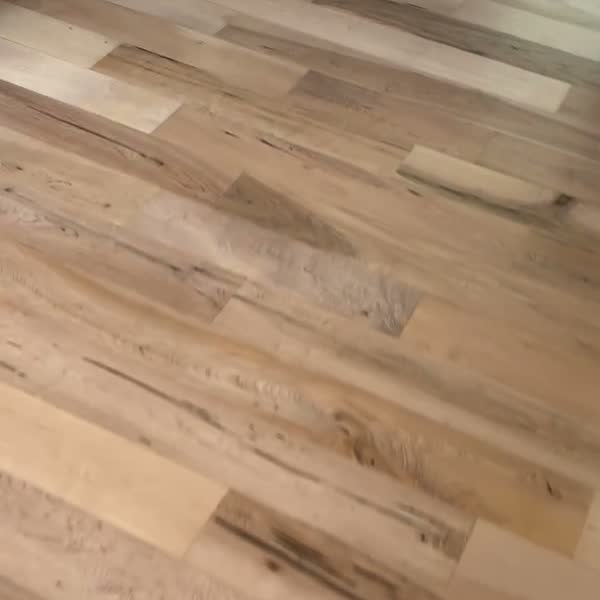
Living in Oregon means embracing the weather. From the persistent autumn rains that stretch through spring, to the heavy winter snows in the foothills, and finally to the dry, sunny summer months, our climate is defined by its seasons.
We love our outdoor lifestyle—hiking in Forest Park, walking along the Sellwood Riverfront, or spending weekends in the Columbia River Gorge.
However, the very elements that make Oregon beautiful can be brutal on your home’s hardwood floors. Wood is a natural, organic material that is highly sensitive to its environment.
Everyday activities and seasonal shifts can damage your hardwood floors, dulling the finish, causing the wood to warp, or creating permanent gaps. Common threats include:
- Tracked-in rainwater and road salt
- Muddy boots and wet dog paws
- Dry indoor heating
- Intense summer sunlight
Protecting your hardwood investment requires a year-round strategy tailored to our unique local climate. In this guide, we will walk you through the seasonal threats your floors face in Oregon and outline practical, professional-grade steps you can take to protect them month after month.
The autumn and winter battle: rain, mud, and standing water
For nine months of the year, water is the primary threat to Portland floors. When you walk into your home after a rainy day, your shoes carry water, road salt, and abrasive grit.
1. The entryway defense system
The first few feet of your home are the most vulnerable. Water left sitting on a hardwood floor will eventually bypass the protective finish, soak into the wood fibers, and cause the edges of the boards to swell and cup.
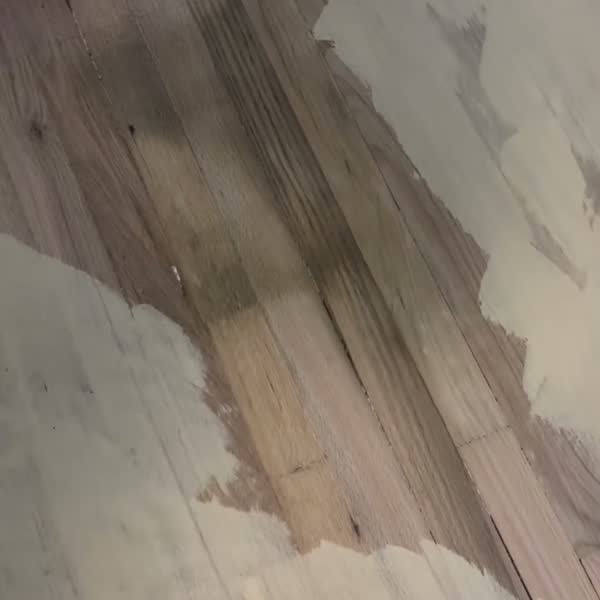
If water pools under a rug, it can react with the natural tannins in oak floors. This turns the wood a dark, permanent gray-black color that cannot be sanded out.
To protect your entryway, implement these essential rules:
- Establish a shoe-free zone: The single most effective rule is a strict "no shoes" policy. Provide a comfortable bench near the door to encourage family and guests to remove their shoes immediately.
- Use proper entry mats: Place heavy-duty, abrasive mats outside every entrance to capture grit, and absorbent, breathable mats inside.
- Avoid rubber-backed rugs: These materials trap moisture underneath them, preventing the wood from breathing and causing condensation that ruins the floor’s finish. Instead, choose rugs with a woven, breathable backing and use a non-slip pad designed specifically for hardwood.
- Install boot trays: Keep a plastic or metal boot tray by the door for wet shoes and umbrellas. Make sure the tray does not have holes that leak onto the floor.
2. The pet factor: wet paws and muddy trails
Oregonians love their dogs, but pets present a double threat during the rainy season. Wet paws carry water onto the floor, and damp wood is softer and more susceptible to scratching.
- Keep a towel station: Keep a clean, dry microfiber towel by the front door specifically for wiping down your pet’s paws and underbelly as soon as they walk inside.
- Maintain nails: Keep your dog’s nails trimmed and filed. Long, sharp nails acting on damp, softened wood will scratch right through the polyurethane finish.
- Clean up spills instantly: If your dog drinks water and leaves a trail of drips, wipe it up immediately. Place a waterproof silicone mat with a raised edge under water dishes to protect the area.
Indoor humidity control: the winter heating shift
While the outdoor air in Oregon is incredibly wet in the winter, the air inside your home becomes very dry once you turn on your heating system. Whether you use a furnace, heat pump, or a traditional wood stove, heating the air lowers its relative humidity.
1. Why low humidity causes gapping
Hardwood floors are happiest when the indoor relative humidity remains stable between 30% and 50%. When it drops below 30% in the dead of winter, the wood planks release their moisture into the dry air and shrink. This shrinkage causes gaps to appear between the boards.
Gapping is a natural characteristic of solid wood floors and is usually temporary. The gaps should close up on their own when the heating is turned off and the spring humidity returns.
However, if the air becomes too dry, the wood can dry out to the point of cracking, splitting, or separating from the subfloor.
2. How to manage indoor air
- Monitor your humidity: Buy a digital hygrometer (humidity monitor) and place it in your main living space. This will tell you exactly what your indoor air is doing.
- Use a humidifier: If your indoor humidity drops below 30%, run a humidifier. Consider installing a whole-house humidifier for ducted systems to automatically maintain a healthy moisture level.
- Manage wood-burning stoves: Wood stoves create intense, localized dry heat. Place a wood-burning heat-resistant pad underneath that extends out at least a couple of feet, and run a room humidifier in the same space to balance the air.
- Avoid extreme temperature swings: Do not turn your thermostat down to 50 degrees at night and crank it to 75 during the day. Gradual temperature changes are much easier on wood.
3. The danger of ice melt and salt
During winter cold snaps, we often use rock salt or chemical ice melts to prevent slipping. When tracked onto hardwood floors, these chemicals leave a white, powdery residue that is highly alkaline and can chemically dull the finish.
More importantly, chemical ice melt attracts moisture. If it sits on your floor, it will draw moisture down into the wood joints while leaving abrasive salt crystals on the surface that act like sandpaper. Always wipe up any white residue with a damp cloth immediately.
The summer threat: UV rays and sunlight fading
When summer finally arrives in Oregon, the rain stops, and we enjoy weeks of intense sunshine. While we welcome the sun, your floors do not.
1. Solar ambering and bleaching
Sunlight contains ultraviolet (UV) and infrared rays that cause a chemical reaction in wood and its finish, similar to a sunburn.
- Sunlight will fade and bleach natural wood colors, turning dark woods like cherry or walnut lighter.
- Clear finishes (especially older oil-based polyurethanes) will turn yellow or orange over time when exposed to UV light, a process known as "ambering."
- Rug shadows: If you keep a large area rug in a sunlit room for years, the wood around the rug will change color while the wood underneath stays the original shade, leaving a dark rectangle.
2. Sun protection strategies
- Install UV-blocking window film: Modern window films can block up to 99% of harmful UV rays. Installing these on south- and west-facing windows will protect your floors.
- Use window coverings: Draw the blinds or curtains during the peak sunlight hours of the afternoon.
- Rotate rugs and furniture: Move your furniture and area rugs slightly every year or two to allow the wood to age and change color evenly.
Cleaning dos and don'ts: preserving the finish
Oregon weather brings dirt, pine needles, and grit into the house. Cleaning your floors regularly is essential, but using the wrong methods can ruin the finish faster than the weather itself.
The don'ts
- Never use steam mops: They are the number one enemy of hardwood. They force hot moisture deep into the joints between your wood planks, causing the wood to cup, buckle, and the finish to peel off.
- Avoid vinegar and water: Vinegar is highly acidic. Over time, the acid will etch the polyurethane finish, dulling the shine and leaving the floor looking cloudy.
- No wet mopping: Do not use a traditional mop and bucket that leaves standing water on the wood. Water will seep into the seams and cause damage.
The dos
- Sweep or vacuum daily: Use a soft-bristle broom or a vacuum set to the "hard floor" setting. Removing grit daily prevents it from acting like sandpaper under your feet.
- Use a microfiber mop: Use a flat microfiber mop and a pH-neutral spray cleaner designed specifically for wood floors. Spray the cleaner lightly onto the mop head, not directly onto the floor.
- Tackle scuffs with a soft cloth: For stubborn scuffs or dried mud, damp a microfiber cloth slightly and rub gently, then dry the spot immediately with a dry towel.
When to call a professional
Even with the best maintenance, the wear and tear of Oregon weather will eventually take its toll.
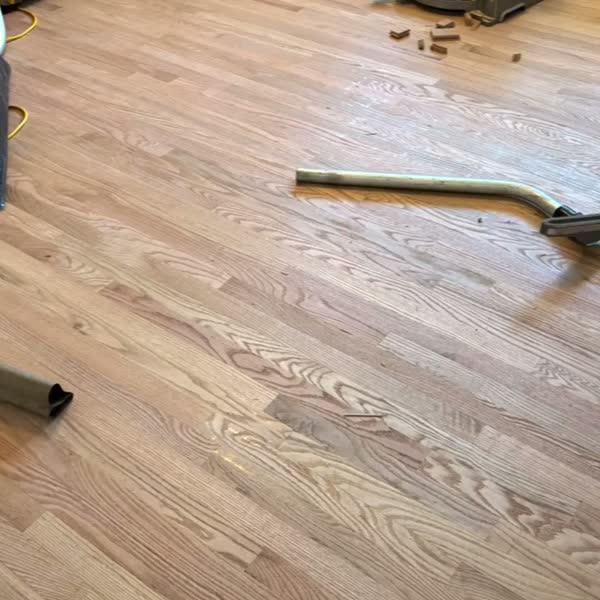
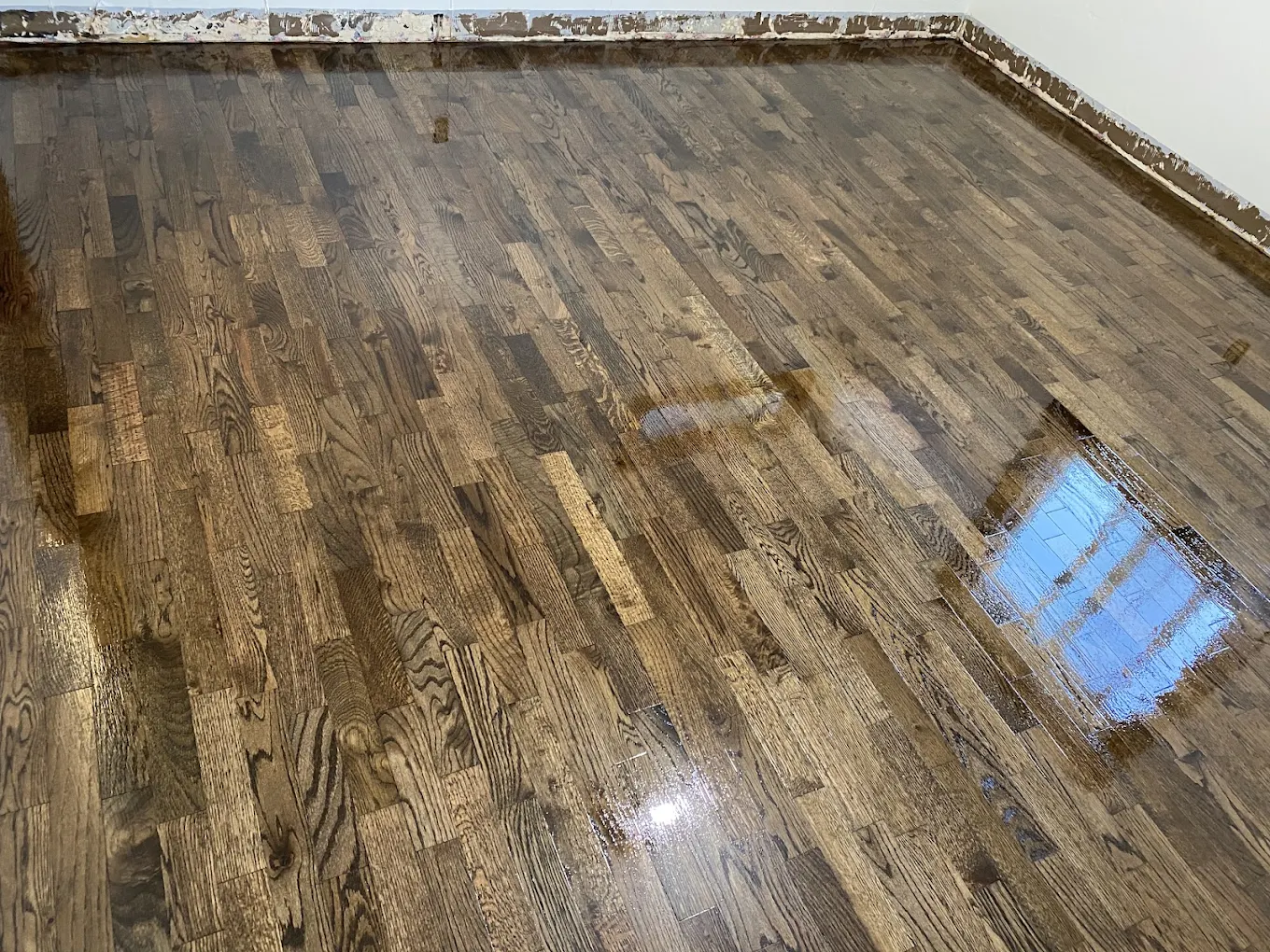
If your floors are starting to look dull and have minor surface scratches, but the wood itself is in good shape, you may just need a screen and recoat. This process involves lightly buffing the top layer of the old finish and applying a fresh coat of polyurethane, restoring the shine in a single day.
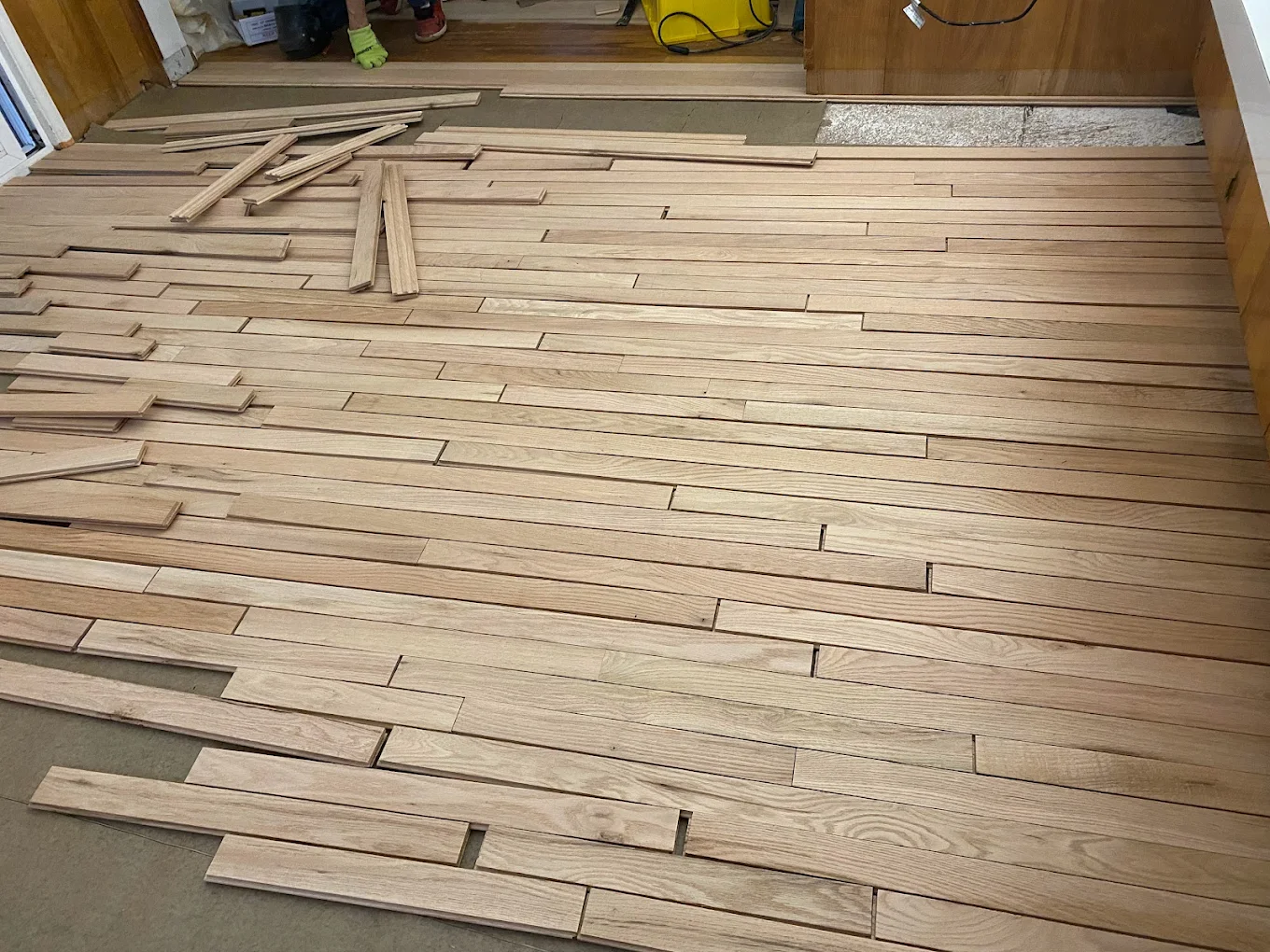
If the finish has worn away completely in high-traffic zones, or if the wood has deep water stains or warping, it is time for a full sand and refinish.
Our team specializes in restoring local floors to withstand whatever the Northwest weather throws at them. If you want to keep your floors looking beautiful through every season, reach out today.
Frequently asked questions
Why do hardwood floors cup in the winter and gap in the summer in Oregon?
Wood swells when absorbing winter humidity (80%+ outdoor RH in Portland) and shrinks during dry furnace heating or summer heat waves when indoor relative humidity drops below 35%.
What indoor humidity range keeps hardwood floors flat in the Pacific Northwest?
Following NWFA standards, keep indoor relative humidity between 35% and 55% and temperatures between 60°F and 80°F year-round so wood stays at 6% to 9% equilibrium moisture content (EMC).
How do you prevent crawlspace moisture from warping solid hardwood floors?
Ensure your crawlspace has an intact 6-mil+ polyethylene ground vapor barrier and cross-ventilation, and install an NWFA-rated vapor retarder over the subfloor before nailing planks.
Topics