Hardwood floor hacks for Portland real estate investors
High-leverage flooring strategies, maintenance tips, and cost-effective refinishing hacks that maximize rental property ROI and resale value.
Portland’s real estate market is highly competitive. Whether you are flipping a mid-century ranch in Cedar Hills, leasing out a Craftsman bungalow in Southeast Portland, or managing a multi-family property in St. Johns, maximizing your return on investment (ROI) is always the top priority.
When preparing a property for rent or sale, investors often focus on kitchens and bathrooms. While those are important, flooring is actually one of the highest-leverage upgrades you can make. The floor is the first thing a prospective tenant or buyer sees when they step through the front door, and it dictates how the entire space photographs for online listings.
Carpet looks cheap and wears out quickly, while cheap laminate can turn off premium buyers. Real hardwood floors, however, carry a high-quality perception that allows you to:
- Command premium rents
- Accelerate your sales timeline
- Reduce long-term maintenance costs
As flooring professionals who work closely with local investors, developers, and property managers, we have developed several strategies to help you get the absolute most value out of your wood floors. Here are five hardwood floor hacks for Portland real estate investors to maximize rent, increase property value, and boost your bottom line.
Hack 1: the 10-year cost math (stop installing rental carpet)
Many landlords default to installing cheap carpet between tenants because the upfront cost is low and it is quick to arrange. However, in residential property management, this is a classic false economy that actively drains your cash flow.
A standard rental carpet has an average lifespan of three to five years under normal use. If you allow pets—which is almost required in the pet-friendly Portland rental market if you want to minimize vacancy times—that lifespan often drops to a single tenancy. Between pet stains, lingering odor retention, wet mud tracked in during our long winter months, and heavy wear in hallways, you will likely find yourself replacing the carpet every time a tenant moves out.
Let us look at the actual 10-year financial math for a typical 1,000-square-foot rental property:
- The carpet trap: If you install basic carpet and pad for $4 per square foot (materials and labor), you spend $4,000. Over 10 years, you will need to replace it at least twice. That is three carpet installations total, costing you $12,000. This does not include the cost of tenant vacancy (carpet replacement takes days, delaying your turn window), cleaning fees between tenants, or the disposal fees for throwing rolls of synthetic carpet into local landfills.
- The hardwood advantage: If you restore the existing hardwood floors or install a durable new hardwood floor, the initial cost is higher. Refinishing existing wood costs around $4 to $6 per square foot ($4,000 to $6,000). Over a 10-year period, that hardwood floor will require zero replacement. At most, you might spend $1,500 on a light buff and recoat after five years to restore the protective seal. Your total 10-year cost is $5,500 to $7,500.
By choosing hardwood, you save between $4,500 and $6,500 in pure capital expenses. More importantly, homes with hardwood floors rent for an average of 10% to 15% more than identical carpeted homes in Portland. In neighborhoods like Alberta, Sellwood, or the Pearl District, tenants will actively bypass listings with old carpet. Hardwood also eliminates the allergen and pet odor issues that lead to extended vacancy periods between leases.
Hack 2: the pre-listing screen and recoat (save 50% on refinishing)
If you are preparing a property to list for sale or trying to secure a new tenant, and the hardwood floors are looking dull, worn, and scratched, do not automatically pay for a full sand and refinish.
If the wood underneath is in good condition, and the scratches have not penetrated through the polyurethane finish to the bare wood, you can use a process called a screen and recoat (also known as a buff and coat).
- How it works: We use a floor buffer with a fine abrasive screen to lightly scuff the top layer of the existing polyurethane finish. This removes minor surface scratches, scuffs, and dullness. We then apply a fresh, clear coat of high-quality polyurethane over the scuffed surface.
- The savings: A screen and recoat costs about half the price of a full sand and refinish. It can be completed in a single day, and the floor is dry enough for foot traffic within 24 hours.
This hack allows you to restore that deep, clean shine that buyers look for in listing photos, without the dust, cost, or extended timeline of a complete sand-down. It is the ultimate trick for flipping houses or prepping rentals on a tight schedule.
Hack 3: the Douglas fir goldmine (unlocking hidden value under carpet)
If you buy an older Portland home built before 1950, there is a very high chance that the ugly, stained carpet in the living room and bedrooms is hiding original Douglas fir floors.
Douglas fir is technically a softwood, but it was widely used as flooring in historic Portland bungalows, foursquares, and Craftsman homes. Many past owners covered these floors with carpet or linoleum in the 1970s and 80s when they began to show wear.
- The hack: Pull up a corner of the carpet near a closet or heating register to check the wood underneath. If you find tight-grain, orange-toned Douglas fir, do not tear it out. Refinish it.
- The marketing play: Portland buyers and tenants love historic character. Refinished Douglas fir floors have a warm, glowing, amber-red aesthetic that screams "historic Portland charm." Listing a property with "original restored Douglas fir floors" immediately sets your listing apart and justifies a premium price.
- The durability caveat: Because fir is softer than oak, it scratches and dents more easily. To protect it in a rental environment, always specify a commercial-grade, extra-durable water-based finish (like Bona Traffic HD). This hard polyurethane topcoat acts as a shield, preventing high heels, furniture legs, and pet claws from denting the soft wood fibers underneath.
Hack 4: staining for modern resale (the photo-friendly color)
If you are doing a full sand and refinish to flip or sell a property, the stain color you choose will dictate how quickly the home sells.
Do not let your personal preferences or outdated trends guide this decision. Gray-washed finishes, which were highly popular five years ago, are now viewed as dated by many buyers. Similarly, dark espresso or ebony floors look modern but show every speck of dust, pet hair, and scratch, which can turn off busy families during open houses.
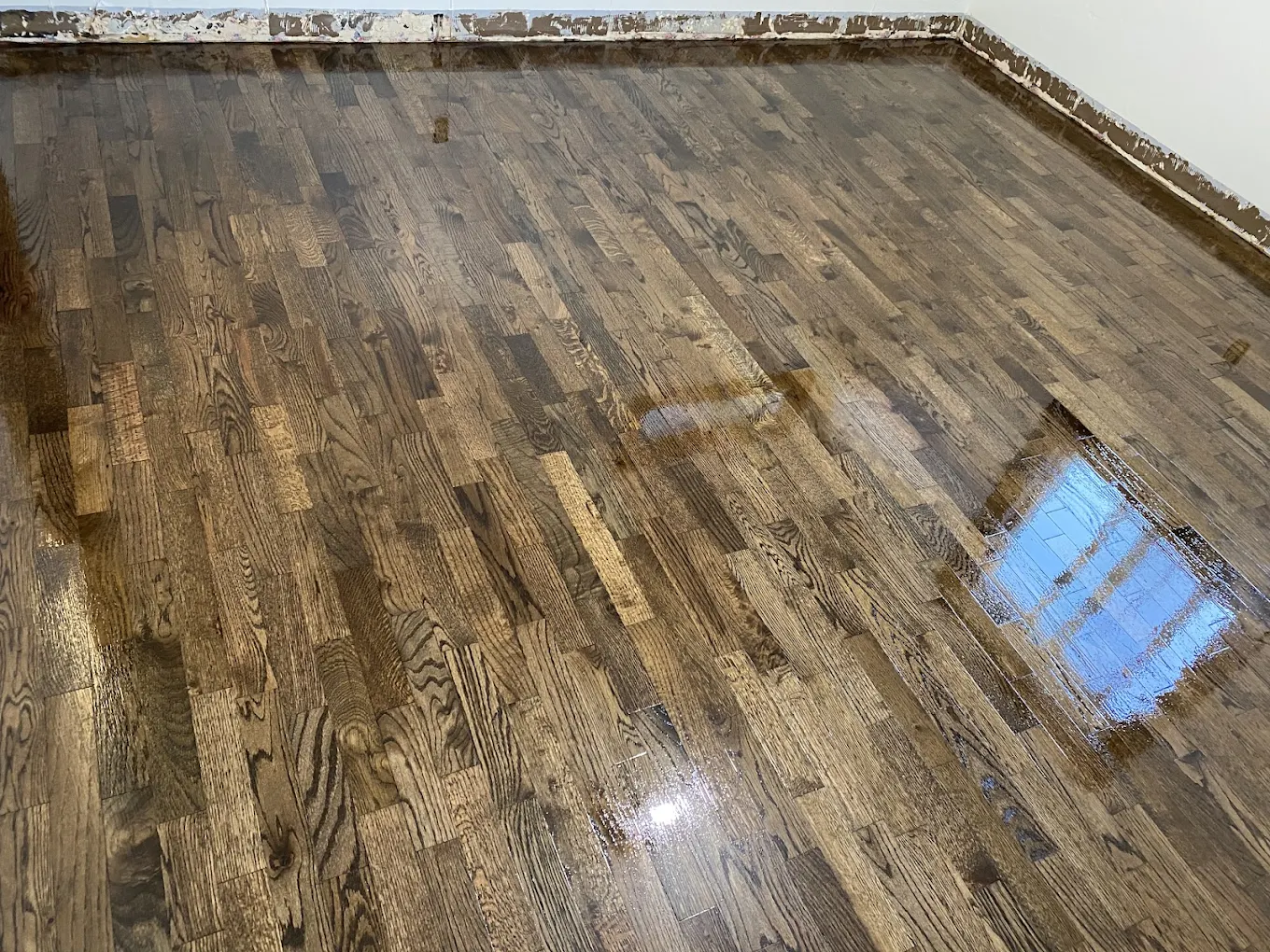
- The winning colors: Currently, the most sought-after finishes in the Portland market are Special Walnut, Provincial, or a simple Natural clear coat on oak. These warm, mid-tone naturals hide dust well, make spaces feel larger and brighter, and photograph beautifully in natural light.
- Neutral appeal: Neutral, warm floor tones allow prospective buyers to easily imagine their own furniture in the space. They do not clash with different wood finishes on dining tables or cabinets, making the home appeal to a wider buyer pool.
Hack 5: invest in commercial-grade finishes to prevent tenant damage
If your property is a long-term rental, tenant abuse is your biggest risk. Tenants will drag heavy furniture across the room without protective felt pads, spill liquids, and let pets run wild.
To protect your investment, the best hack is to invest in a commercial-grade, multi-component water-based finish, such as Bona Traffic HD or Loba 2K Invisible Protect.
- The upfront cost: These finishes cost about $100 to $120 more per gallon than standard residential finishes. For a typical 1,000-square-foot home, this might add $200 to $300 to your total materials bill.
- The return: Commercial finishes are designed for high-traffic retail spaces, museums, and restaurants. They are incredibly tough, chemically resistant, and scratch-resistant. Spending that extra $300 upfront will extend the life of your floor finish by five to seven years, preventing scratches from reaching the wood and saving you from having to sand the floors again after a tenant moves out.
Hack 6: strategic trim and transition molding hacks
One of the common areas of failure on rental properties is at the transitions between rooms (e.g., where hardwood meets tile in a bathroom or kitchen, or carpet in a bedroom). Tenants often step heavily on these areas, and sliding furniture can catch on loose transitions, cracking the wood and creating a tripping hazard.
- Use flush reducers instead of T-moldings: Wherever possible, use flush-mount reducers that are glued and nailed securely to the subfloor. Avoid cheap metal transition strips, which look low-end and bend easily.
- Paint-grade baseboards: If you are installing new flooring, do not try to save money by reusing old, warped shoe molding. Install fresh white paint-grade baseboards and shoe molding. The bright white contrast against newly refinished hardwood floors makes the entire room pop in photographs and gives the property a clean, modern, renovated feel.
Summary checklist for real estate investors
- Flipping a mid-century home? Go with a natural or light Special Walnut stain to highlight open floor plans.
- Restoring an older rental? Look for hidden Douglas fir floors under old carpet and finish them with a commercial-grade water-based polyurethane to handle tenant traffic.
- Pre-listing prep on a tight schedule? Use a screen and recoat to restore shine in 24 hours at half the cost of a full sand.
- Managing properties on concrete slabs? Avoid solid wood. Install a high-quality engineered hardwood with at least a 3mm wear layer so it can be restored in the future.
- High-traffic rental? Spend the extra $300 on a commercial-grade finish like Bona Traffic HD to protect your wood from scratches and spills.
By treating your floors as a long-term asset rather than an ongoing maintenance expense, you can increase your rental premiums, boost your resale value, and keep more money in your pocket. If you have an upcoming project in Portland and want to analyze the best flooring strategy for your budget, contact us today.
Frequently asked questions
What is the fastest way to refresh hardwood floors before listing a Portland home?
A 1-day professional buff and recoat ($2.50 to $3.75 per square foot) removes surface scuffs and restores a uniform satin or matte sheen in 4 to 6 hours without bare-wood sanding.
Does refinishing hardwood floors increase home resale value in Portland?
Yes. National Wood Flooring Association and NAR remodeling studies consistently rank hardwood floor refinishing at 100% to 147% cost recovery while cutting days on market.
Should home sellers pull up old carpet if original hardwood is underneath?
Almost always yes. Exposing and refinishing original oak or vertical-grain Douglas fir under worn carpet ($4.99 to $6.95/sq ft) transforms buyer perception and eliminates carpet allowances.
Topics