Commercial flooring options for Portland businesses
Choosing the right commercial-grade hardwood flooring to withstand high foot traffic in Portland retail shops, creative offices, and business spaces.
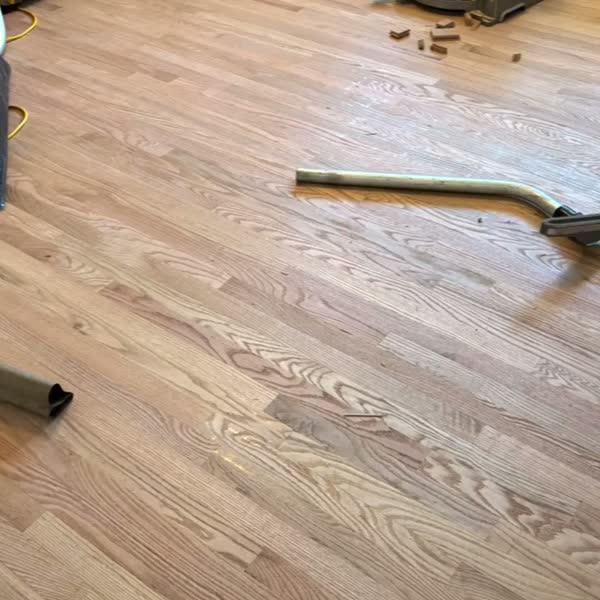
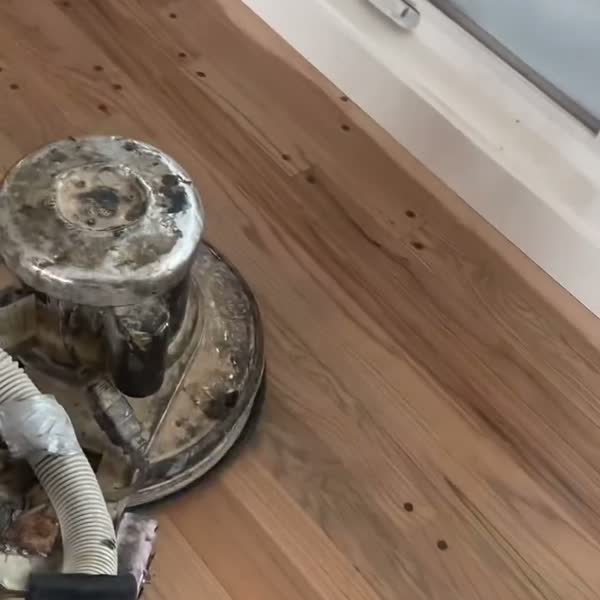
For high-traffic Portland businesses, commercial hardwood finished with 2K Bona Traffic HD ($4.99–$6.95/sq ft for restoration; $10.50–$15.00/sq ft installed) and 20-mil commercial LVP ($6.50–$10.00/sq ft installed) offer the best wet-winter durability. Overnight dustless sanding and 4-hour rapid-cure waterborne coatings allow retail stores, offices, and restaurants to reopen the next morning with zero downtime.
2026 Portland commercial flooring cost and lifespan comparison
Portland's business scene is diverse and active. From creative offices in the Central Eastside and retail boutiques in the Pearl District to coffee shops on Division Street and professional offices downtown, local businesses operate in unique, high-traffic spaces. When designing or renovating these spaces, the choice of flooring is one of the most critical decisions a business owner has to make.
Commercial flooring must perform on multiple levels:
- Durability: It needs to withstand constant foot traffic, wheeled carts, and rainy-day mud.
- Aesthetics: It must match the business's brand and create an inviting environment for clients and employees.
- Efficiency: It must be installed quickly to minimize business downtime and lost revenue.
Choosing the right flooring involves balancing these needs. Here is a guide to the most durable and stylish commercial flooring options for Portland businesses, along with advice on installation scheduling and maintenance.
The demands of commercial traffic
Before looking at specific flooring materials, it is important to understand what commercial floors have to go through. Unlike residential homes, where people often remove their shoes, commercial spaces host a constant stream of outdoor footwear.
In Portland, this means your floors will face:
- Rainwater and mud: Our wet winters mean customers and employees will track moisture, street grime, and de-icing salts into your business daily.
- Heavy footwear: High heels, heavy work boots, and hard-soled shoes exert massive point-pressure on flooring surfaces, which can lead to denting and scratching.
- Rolling loads: Office chairs, utility carts, and inventory dollies put constant stress on the floor, especially along pathways and corridors.
- Spills and stains: Coffee shops, restaurants, and employee break rooms require flooring that can handle food and liquid spills without staining or warping.
Because of these demands, residential-grade flooring is not suitable for commercial applications. You must choose products specifically designed, rated, and warrantied for commercial use.
Top commercial flooring options
Here are the most popular and effective flooring materials used in Portland retail, office, and hospitality spaces:
1. Commercial-grade luxury vinyl plank (LVP) and tile (LVT)
Luxury vinyl plank has become the most popular choice for modern commercial spaces, and for good reason. LVP offers a realistic wood or stone appearance at a fraction of the cost, and it is incredibly durable.
For commercial applications, the key specification is the wear layer. While residential LVP often has a wear layer of 6 to 12 mils, commercial LVP should have a wear layer of at least 20 mils (0.5 mm) or higher.
Pros of LVP/LVT:
- Waterproof: LVP is 100% waterproof, making it excellent for entryways, cafes, and restrooms.
- Easy maintenance: It requires no waxing or polishing; simple sweeping and damp mopping are all that is needed to keep it clean.
- Individual plank replacement: If a section of the floor gets damaged by a heavy dropped object, we can remove and replace individual planks without tearing up the entire room.
- Sound absorption: High-quality LVP with attached underlayments helps dampen sound, which is crucial for busy retail environments and open office layouts.
2. Engineered hardwood
Engineered hardwood consists of a real wood veneer bonded to a multi-layer plywood core. This construction gives it excellent dimensional stability, meaning it expands and contracts much less than solid wood when exposed to temperature and humidity fluctuations.
Engineered wood is the go-to choice for businesses that want the warmth and prestige of real wood but need to install it over concrete subfloors (which are standard in commercial properties).
Pros of engineered hardwood:
- Authentic look: Since the top layer is real wood (such as oak, maple, or walnut), it provides the rich texture and natural variety that vinyl cannot fully replicate.
- Concrete compatibility: It can be glued down directly to concrete subfloors or installed as a floating floor using specialized vapor barriers.
- Refinishing potential: Depending on the thickness of the top veneer layer (we recommend a wear layer of at least 3 mm to 4 mm for commercial use), engineered floors can be sanded and refinished one or two times if they become worn.
3. Commercial hardwood with heavy-duty finishes
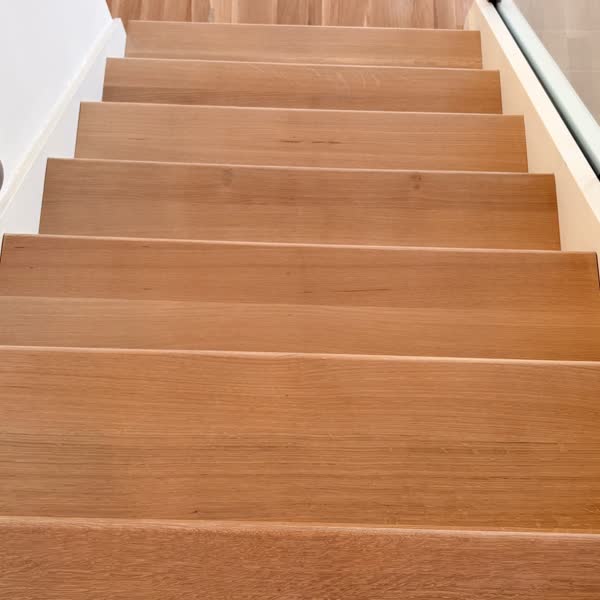
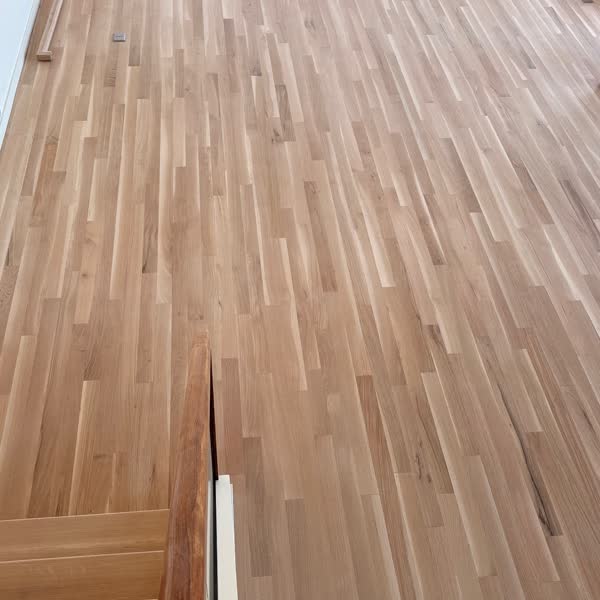
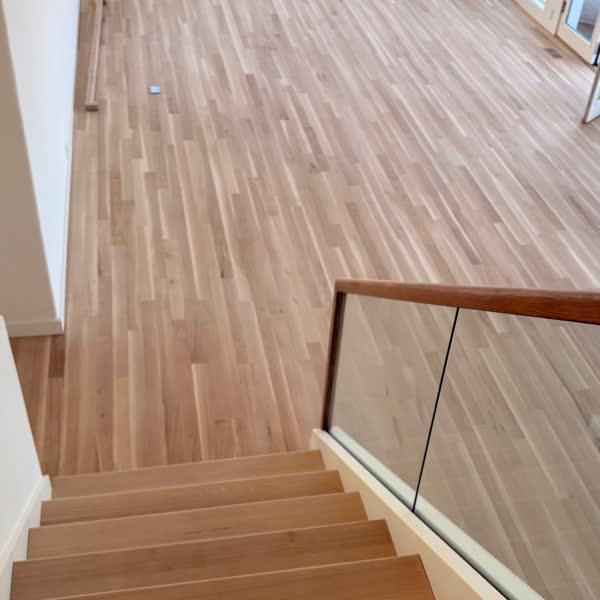
For historic properties, high-end retail, or executive boardrooms, nothing beats the look of solid hardwood. However, to make solid wood work in a commercial setting, the finish is the most critical component.
Instead of standard residential finishes, we use commercial-grade, multi-component water-based polyurethanes (like Bona Traffic HD) or specialized penetrating hardwax oils.
Pros of solid hardwood in commercial spaces:
- Longevity: Solid wood can be sanded and refinished multiple times, meaning the floor can last for decades, adapting to different tenants and business styles.
- Prestige: Real wood communicates quality and high standards, which is important for design agencies, high-end boutiques, and professional service offices.
- Refinishing flexibility: If a business owner decides to change the interior design, the floor can be sanded and restained a completely different color.
4. Commercial carpet tiles
For traditional office spaces, call centers, and conference rooms, commercial carpet tiles are a highly practical option. Unlike broadloom carpet (which comes in large rolls), carpet tiles are individual squares that are glued down in a grid.
Pros of carpet tiles:
- Acoustics: Carpet tiles provide the best sound dampening, reducing echo in large offices and keeping noise levels manageable.
- Spot replacement: If an employee spills coffee or ink on the carpet, you only need to pull up and replace the affected tiles, rather than replacing the carpet for the entire room.
- Access to under-floor wiring: Many modern office spaces run cables and wiring beneath the floor. Carpet tiles can be easily lifted to access these utilities and then put back in place.
Importance of professional subfloor preparation in commercial spaces
A commercial floor is only as good as the subfloor underneath it. In commercial construction, the subfloor is almost always concrete. Before installing any new flooring, the subfloor must be thoroughly evaluated and prepared.
Moisture testing
Concrete subfloors, especially those on-grade or below-grade, can release moisture vapor. If this moisture is trapped beneath wood, engineered wood, or vinyl flooring, it can cause adhesive failure, cupping, buckling, or mold growth. We perform relative humidity (RH) testing on concrete subfloors using in-situ probes to ensure moisture levels are within acceptable limits. If moisture is too high, we apply a commercial-grade moisture vapor barrier (epoxy sealer) to protect the new floor.
Leveling and flatness
Commercial spaces often require flat, smooth floors, particularly for rolling carts, display cases, and layout aesthetics. The industry standard is that the subfloor must be flat within 3/16 of an inch over a 10-foot span. We grind down high spots on concrete, fill low spots with self-leveling cement underlayment, and ensure the surface is clean, dry, and structurally sound before the flooring material is laid.
Cost vs. lifespan: a long-term view
When selecting a commercial floor, looking only at the initial cost per square foot is a mistake. Business owners should evaluate the total cost of ownership, which includes installation, maintenance, repair, and lifespan.
- Luxury vinyl plank (LVP): Low initial cost, low maintenance, but lasts 10 to 15 years in a busy commercial environment. Easy to replace individual planks, but the entire floor will eventually need replacement.
- Engineered hardwood: Moderate to high initial cost, moderate maintenance, lasts 25 to 50 years. Can be sanded once or twice, giving it a longer life than vinyl but sensitive to moisture.
- Solid hardwood: High initial cost, moderate maintenance, can last 100+ years. High upfront cost, but because it can be sanded and refinished multiple times, it represents the lowest cost per year of use over the life of a historic building.
- Carpet tiles: Low to moderate initial cost, moderate maintenance, lasts 7 to 10 years. Excellent for offices due to acoustic benefits and ease of replacing stained tiles.
Minimizing business disruption: installation scheduling
One of the biggest concerns for business owners is downtime. Every day your doors are closed is a day of lost revenue and interrupted operations.
We address this concern through careful planning and flexible scheduling:
Night and weekend installation
We coordinate our installation crews to work during your off-hours. Whether that means working overnight after your retail store closes, or executing the installation over a weekend when office staff are home, our goal is to ensure your business remains open during normal operating hours.
Low-VOC, low-odor finishes
When installing or refinishing wood floors in a commercial setting, air quality is a major consideration. Strong chemical odors can linger for days, causing discomfort for employees and customers, and potentially triggering health complaints.
We use low-VOC (volatile organic compounds), water-based finishes that are GREENGUARD certified. These finishes dry quickly, emit minimal odor, and allow the space to be safely reoccupied within hours of application. This means a floor finished on Sunday evening is ready for normal office traffic by Monday morning.
Rapid-curing technology
For projects with extremely tight turnaround times, we can use UV-cured finishes. These finishes cure instantly when exposed to a specialized mobile UV light machine. As soon as the light passes over the floor, the finish is 100% cured and ready for heavy foot traffic, eliminating the standard 48-hour waiting period.
Maintenance guidelines for commercial floors
To protect your investment and keep your business looking its best, a consistent maintenance schedule is essential.
Here are the guidelines we recommend for all commercial installations:
- Use heavy-duty walk-off mats: Place large, high-quality mats at all exterior entrances. These mats capture the bulk of the dirt, water, and debris before it ever reaches your main flooring. Mats should be cleaned or replaced regularly.
- Implement a daily sweeping schedule: Fine grit and dirt act like sandpaper under foot traffic. Sweeping or vacuuming daily prevents these abrasive particles from scratching the floor's finish.
- Use the right cleaning products: Avoid harsh chemical cleaners, ammonia, or wax-based polishes. Use cleaning solutions specifically formulated for your flooring type (e.g., pH-neutral cleaners for wood, manufacturer-recommended solutions for LVP).
- Install protective felts on furniture: Ensure that all chair legs, desk feet, and heavy display racks have high-quality felt pads. For rolling office chairs, require the use of protective plastic chair mats, or replace standard hard plastic wheels with soft rubber caster wheels designed for hard surfaces.
Ready to upgrade your commercial space?
Your floor is the foundation of your business's physical space. Investing in a durable, stylish commercial floor improves the daily experience of your employees, impresses your clients, and protects your property value for years to come.
At Flooring PDX, we understand the unique demands of commercial projects. We work with you to select the ideal materials, plan a non-disruptive installation schedule, and deliver a floor that performs under pressure.
Get a free quote today to discuss your commercial flooring project. We will schedule a walkthrough of your space, review material samples, and provide a detailed estimate designed to fit your business schedule and budget.
Frequently asked questions
Q: How much does commercial flooring cost per square foot in Portland?
A: Commercial hardwood floor refinishing with Bona Traffic HD ranges from $4.99 to $6.95 per square foot, 1-day commercial maintenance recoating costs $1.75 to $2.75 per square foot, commercial 20-mil LVP installation runs $6.50 to $10.00 per square foot, and new engineered hardwood over concrete ranges from $10.50 to $15.00 per square foot.
Q: Can you refinish commercial wood floors overnight so our business does not close?
A: Yes. We schedule commercial night-shift and weekend crews across the Portland metro area. Using 99.8% HEPA dustless extraction and rapid-curing low-VOC Bona Traffic HD (<150 g/L VOC), your restaurant, retail showroom, or office is ready for foot traffic by morning without lingering chemical odors.
Q: Do you provide commercial insurance certificates (COI) for Portland property managers?
A: Yes. Flooring PDX (Oregon CCB #227332, Washington #FLOORPI782R2) is fully licensed, bonded, and insured for commercial work, and we provide same-day Certificate of Insurance (COI) documentation naming your building owner or property management group as an additional insured.
Topics