Engineered vs solid hardwood for Portland's unique climate
How Portland's seasonal relative humidity swings affect engineered and solid hardwood. Learn which structure is best for your home's layout and subfloor.
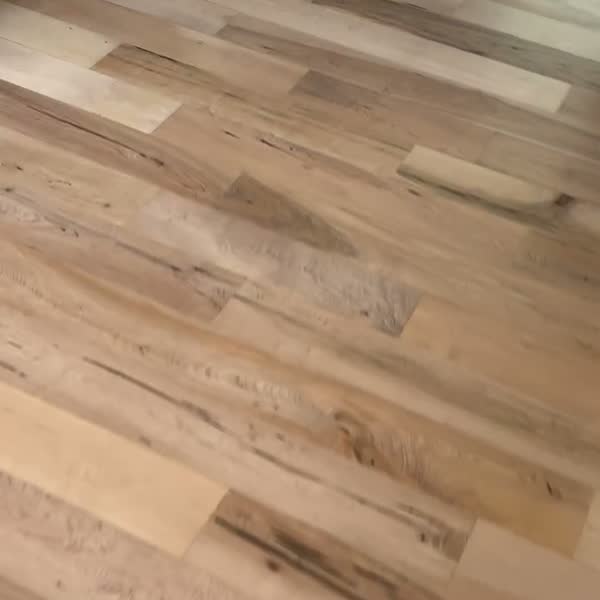
Choosing new hardwood floors is one of the most significant investments you will make in your home. Beyond the color, grain, and width of the planks, the most fundamental decision you will face is whether to install solid hardwood or engineered hardwood.
While both options may look identical from the surface, they behave very differently underneath.
In the Pacific Northwest—and specifically the Portland metro area—this choice is not just about aesthetics or price. It is a question of science and climate. Portland has a unique weather pattern:
- Damp, rainy winters where outdoor air is saturated with moisture.
- Dry, warm summers that are increasingly hot.
- Dramatic indoor shifts as heating systems in winter and air conditioning in summer drastically change the relative humidity.
Because wood is a natural, hygroscopic material, it acts like a sponge. It absorbs and releases moisture in response to these seasonal swings.
Choosing the wrong type of wood for your specific home layout, subfloor, or neighborhood can lead to gapping, cupping, buckling, and expensive repairs.
In this guide, we will examine the differences between solid and engineered hardwood, how they perform in Portland’s climate, and how to determine which option is the right fit for your home.
Understanding the structure: solid vs. engineered
To understand how these materials behave in our climate, we must first look at how they are constructed.
What is solid hardwood?
Solid hardwood is exactly what it sounds like. Each plank is a single, solid piece of wood cut from a tree trunk, typically milled to a standard thickness of 3/4 of an inch.
It features a tongue-and-groove profile on the sides for locking the planks together during installation. Because it is solid wood from top to bottom, it can be sanded, stained, and refinished multiple times over its lifetime—often lasting 80 to 100 years or more.
What is engineered hardwood?
Engineered hardwood is still 100% real wood, but it is constructed in distinct layers.
- The top layer (wear layer/veneer): A slice of your chosen hardwood species, ranging in thickness from 1 millimeter to 6 millimeters.
- The core: Located underneath the wear layer, this core is made of multiple layers of plywood, birch, or high-density fiberboard.
These core layers are stacked in a cross-grain configuration—meaning each layer runs perpendicular to the one above and below it. They are then bonded together under extreme heat and pressure, creating a highly stable plank.
The moisture battle: how Portland weather affects wood
Wood expands and contracts primarily across its width, rather than its length. When relative humidity rises, wood cells absorb water vapor and swell. When the air dries out, the wood releases moisture and shrinks.
In Portland, our outdoor relative humidity in the winter regularly averages between 80% and 90%. While heating your home dries out the indoor air, it still remains relatively damp compared to arid climates. In the summer, our humidity drops significantly, and warm days dry out the wood.
How solid hardwood reacts
Because solid hardwood is a single piece of wood, its natural grain all runs in the same direction. When moisture levels shift, the entire plank expands or contracts in unison across its width.
- In the winter: The wood absorbs moisture and expands. If planks are installed too tight or lack proper expansion gaps along walls, they will press against each other. This causes the edges of the boards to lift—a condition known as cupping.
- In the summer: The dry air causes the wood to shrink. As planks contract, spaces appear between them. While minor gapping in the summer is normal for solid wood floors, excessive movement can lead to permanent gaps that collect dirt and dust.
How engineered hardwood reacts
Engineered hardwood is designed specifically to counteract this movement. Because the plywood core layers are glued in perpendicular directions, they fight against each other's natural expansion and contraction.
When the top wear layer tries to expand in response to winter dampness, the layer below it holds it firmly in place. This makes engineered hardwood dimensionally stable. In fact, it moves up to 80% less than solid hardwood in response to temperature and humidity fluctuations!
Subfloors and home layout: where each flooring wins
Your home's construction and where you plan to install the flooring play a massive role in deciding which material to use.
1. Concrete slabs vs. plywood subfloors
Many newer homes in areas like Happy Valley, Beaverton, or the Pearl District are built on concrete slabs. Concrete is porous and holds moisture from the soil underneath.
- Solid hardwood: Should never be installed directly over concrete. Moisture rising from the slab will warp the wood. To install solid wood, you must build a complex subfloor system of sleeper joists or lay down thick plywood over a heavy vapor barrier. This adds significant cost and raises the height of your floors.
- Engineered hardwood: The standard choice for concrete slabs. It can be glued directly to the concrete using a moisture-curing adhesive that doubles as a vapor barrier, or it can be floated over a high-quality underlayment.
2. Basements and below-grade spaces
Basements are notorious for high humidity, damp concrete, and the risk of water leaks.
- Solid hardwood should never be installed in a basement; it is almost guaranteed to fail.
- Engineered hardwood, with its stability, can safely be installed in finished basements, provided you use a proper moisture barrier underneath.
3. Radiant heating systems
Radiant floor heating is an excellent way to heat a home, especially during chilly Portland winters. However, direct heat can dry out wood floors rapidly, causing solid wood planks to warp and gap severely.
Engineered hardwood is the only hardwood flooring recommended for installation over radiant heat, as it can withstand temperature changes without separating.
Neighborhood considerations: matching the home’s character
If you own an older home, you must consider historic value and structural characteristics.
Historic Craftsman and mid-century homes
In historic neighborhoods like Irvington, Laurelhurst, Alameda, or Sellwood, homes were built with solid wood floors—often Douglas fir, white oak, or red oak.
- Preserving history: If you are restoring or adding onto one of these classic homes, solid hardwood is usually the best choice to preserve the home's historic integrity.
- Customization: Solid wood planks can be custom-sanded and finished on-site to match the existing floors perfectly.
- Structural flex: Older homes tend to have natural airflow and plaster walls that handle humidity shifts differently than modern, airtight homes. Solid wood fits the physical character and structural flex of these older properties beautifully.
Modern subdivisions and townhomes
For modern builds in Hillsboro, Tigard, or Lake Oswego, engineered hardwood is often preferred.
Modern homes are tightly sealed and frequently utilize concrete slabs, crawlspaces, or radiant heating. Engineered flooring allows for wider planks (5 inches to 7 inches or more), which are highly popular in modern interior design.
While solid wood planks wider than 5 inches are highly prone to cupping and gapping in Portland's climate, engineered planks can easily go up to 7 or 9 inches wide while remaining completely flat.
Refinishing potential: the longevity factor
The most significant advantage of solid hardwood is its lifespan. Because you can sand it down to bare wood multiple times, a solid oak floor can last a century. If you decide to change your decor style in ten years, you can sand the floors and apply a completely different stain color.
With engineered hardwood, the refinishing potential depends entirely on the thickness of the wear layer:
- 1mm to 2mm wear layer: Entry-level engineered floors. They cannot be fully sanded because the machine would tear through the thin veneer. They can only be lightly buffed and recoated (screened and recoated) to refresh the topcoat.
- 3mm to 4mm wear layer: Mid-range floors. They can be fully sanded and refinished 1 to 2 times over their lifespan.
- 5mm to 6mm wear layer: Premium engineered floors. With a wear layer almost as thick as the usable wood on a solid plank, they can be sanded and refinished 3 to 4 times, offering a lifespan of 50 to 80 years.
Tip: If you choose engineered hardwood, we always recommend investing in a product with a wear layer of at least 3mm or 4mm, especially if you have pets, children, or plan to stay in the home long-term.
Summary checklist: which one should you choose?
Choose solid hardwood if:
- You want floors that will last for 80 to 100 years.
- You are renovating a historic Portland home and want to preserve its original character.
- Your subfloor is plywood or oriented strand board (OSB) on or above grade.
- You prefer a traditional, on-site sand and finish rather than prefinished planks.
- You want the flexibility to change your stain color multiple times in the future.
Choose engineered hardwood if:
- You are installing flooring in a basement, over concrete, or over a radiant heating system.
- You want wide planks (wider than 5 inches) without risking cupping or gapping.
- You want a faster installation process (engineered flooring is often prefinished, meaning no sanding or finish drying time on-site).
- You want to minimize natural movement of the wood during wet Portland winters and dry summers.
- You are installing flooring in a high-humidity zone or over a crawlspace where moisture levels are difficult to control.
Understanding how wood species and structures interact with your home’s environment is key to a successful project. Whether you choose the timeless longevity of solid wood or the modern stability of engineered planks, our team is ready to guide you through the process, measure your home's moisture levels, and ensure a beautiful, lasting installation.
Topics